

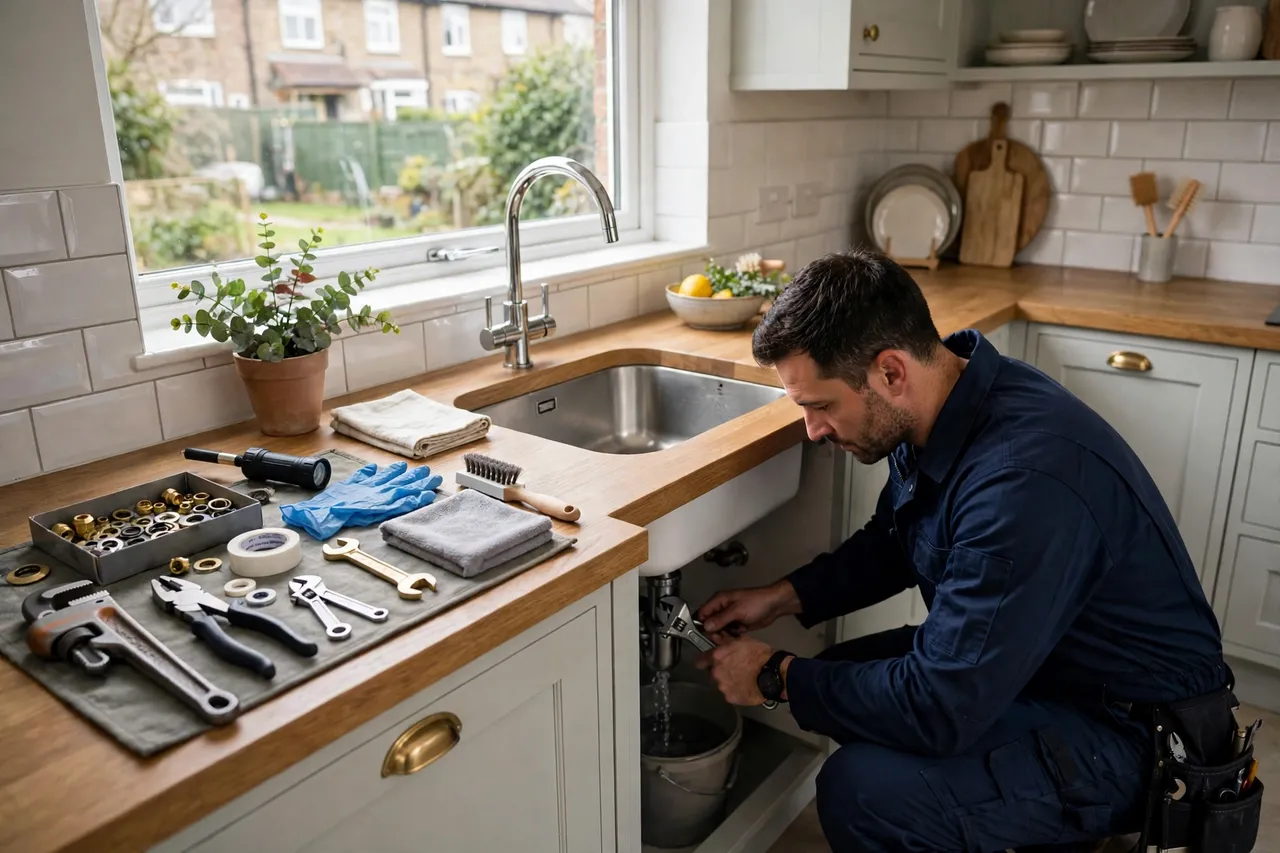
A burst pipe, a boiler that gives up in January, a tap that will not stop dripping: sooner or later every homeowner needs a reliable plumber, and the worst time to go looking for one is when water is already spreading across the kitchen floor. Choosing a reliable plumber before an emergency happens gives you time to check credentials, compare prices and build a relationship with someone you trust. This guide walks through exactly how to do that, what plumbing work should cost, and the warning signs that a quote is too good to be true.
What a Reliable Plumber Looks Like
A reliable plumber is not simply someone who answers the phone quickly. Look for a trader who is happy to show identification, provides a written quote before work begins, and explains what they are doing in plain language. For any work involving gas, such as boilers and gas hobs, the engineer must be on the Gas Safe Register by law, and you can check their registration number online in a couple of minutes. For general plumbing, membership of a trade body such as the Chartered Institute of Plumbing and Heating Engineering is a good sign, though plenty of excellent plumbers rely on reputation alone.
Reviews matter, but read them properly. A long run of specific, detailed reviews that mention punctuality, tidiness and clear pricing is far more convincing than a handful of vague five-star comments. The same careful checking applies whenever you hire a professional or make a big purchase: the diligence in our guide to buying a reliable used family car — checking history, paperwork and seller reputation — translates directly to hiring tradespeople.
How to Find Candidates Worth Calling
Start with personal recommendations from neighbours, friends and local community groups, because a plumber who has done good work on your street has a reputation to protect. Local independent plumbers often offer better value and faster response times than national call-centre firms, whose prices include layers of overheads. If you search online, cross-check the business name against review sites and Companies House, and be wary of traders who only list a mobile number and no address.
Choosing well matters for repairs of every kind. Our overview of common auto repair services makes the same point for garages: the cheapest advert is rarely the most trustworthy, and a business that explains its charges clearly is usually the one worth keeping.
Understanding Plumbing Costs in the UK
Most plumbers charge either an hourly rate or a fixed price per job. As a rough guide, expect to pay more in London and the South East than elsewhere, and expect emergency call-outs in the evening or at weekends to carry a premium. Common jobs such as fixing a leaking tap, unblocking a drain or replacing a toilet fill valve sit at the lower end of the scale, while bathroom installations and boiler work run into the thousands. Always ask what the quote includes: parts, labour, VAT and any call-out fee should be itemised.
Comparing quotes properly means comparing like with like. Just as drivers learn from guides to car service prices that a headline figure can hide extras, a plumbing quote that seems cheap may exclude parts or guarantee nothing. Get at least three written quotes for any job over a few hundred pounds, and ask each plumber the same questions so the answers can be compared fairly.
Questions to Ask Before You Book
Before agreeing to anything, ask: Are you insured, and can I see the certificate? Do you guarantee your work, and for how long? Will you supply the parts or should I, and what happens if a part fails? Who will actually do the work — you or a subcontractor? How do you want to be paid, and at what stage? A reliable plumber answers these without hesitation. Payment is normally due on completion for small jobs; for larger projects, staged payments linked to finished milestones are standard. Never pay the full amount upfront in cash.
Emergencies: What to Do Before the Plumber Arrives
When a pipe bursts, your first job is not finding a plumber but stopping the water. Know where your stopcock is — usually under the kitchen sink or where the main enters the house — and turn it off. Switch off the boiler and open the taps to drain the system. Move anything water can damage, take photos for insurance, and only then start calling. Knowing your stopcock’s location is the household equivalent of the checks in our holiday car preparation checklist: five minutes of preparation before you travel can prevent a disaster while you are away, and turning the water off at the mains is the single best step before any trip.
Red Flags That Should End the Conversation
Walk away from any trader who demands full payment upfront, refuses to put a quote in writing, pressures you to decide on the spot, or offers a suspiciously large discount for cash. Doorstep callers who claim to have “noticed a problem” with your roof or pipes while passing are a classic scam pattern. A genuine professional is busy enough not to need pressure tactics. Equally, be cautious with anyone who quotes a firm price for a complex job without seeing it first: honest plumbers explain that some diagnoses can only be confirmed once they are on site.
Keeping a Good Plumber Once You Find One
Routine care prevents most emergencies. Book a boiler service annually, fix drips promptly before they damage units and floors, and keep an eye on water pressure changes, which can signal hidden leaks. The principle is identical to car ownership, as our guide to everyday Toyota ownership and servicing explains: small, regular maintenance is always cheaper than the repair you avoided. Keep your plumber’s number saved, leave an honest review after good work, and you will rarely have to start the search from scratch again.
Finding a reliable plumber takes a little effort upfront, but it pays for itself the first time something leaks at 10pm. Check credentials, compare written quotes, watch for red flags, and keep the number of someone good. Your future self, standing in a puddle in January, will be grateful.
