

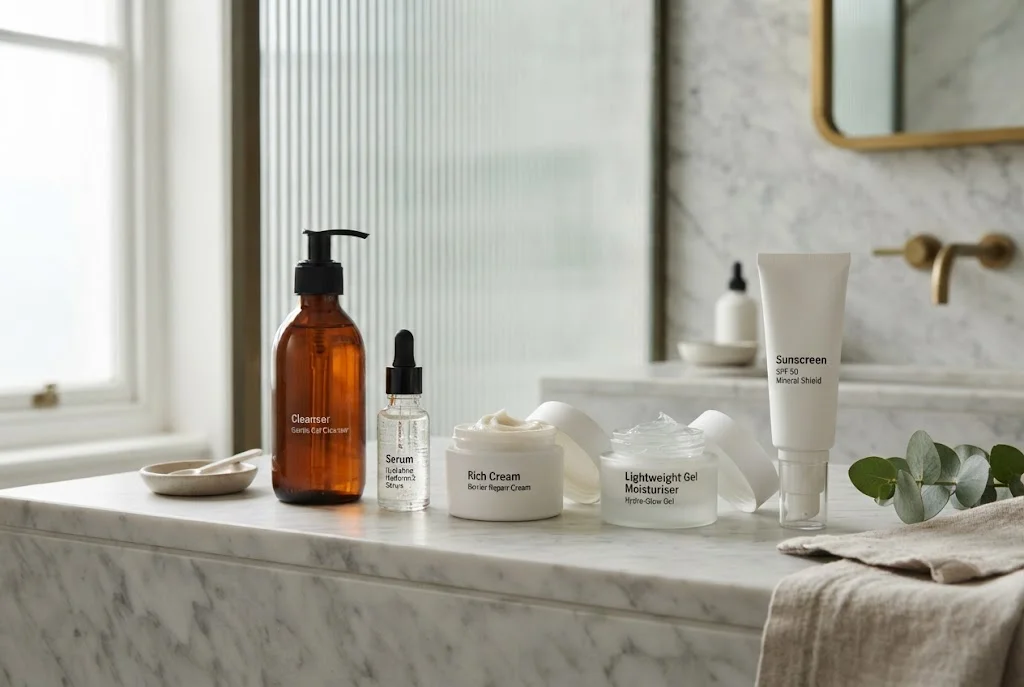
Skincare for different skin types is not about finding one perfect routine that works for everyone. Dry, oily, combination, sensitive, acne-prone and mature skin can have very different needs. Even within the same category, individual skin can respond differently to products, weather, lifestyle and changes over time.
Understanding your skin type gives you a useful starting point when choosing cleansers, moisturisers, serums and other facial products. The aim is to create a routine that keeps your skin comfortable while addressing the concerns that matter to you, without adding unnecessary products.
Whether you are starting a beginner skincare routine or reviewing an established one, learning how to adapt products to your skin can make your daily routine more practical and easier to maintain.
What Are the Main Skin Types?
Skin is commonly described as normal, dry, oily, combination or sensitive. These categories are useful for understanding general tendencies, but they are not strict medical classifications. Your skin can also change over time.
For example, someone may experience increased dryness during colder weather or notice more oiliness during warmer periods. Dehydrated skin can also occur alongside oily or combination skin because hydration and oil production are not the same thing.
Instead of focusing too heavily on labels, pay attention to how your skin feels and behaves. This can provide useful clues when deciding which skincare products and textures are most comfortable for you.
Skincare for Dry Skin
Skincare for dry skin should focus on maintaining comfort and supporting the skin’s moisture balance. Dry skin can feel tight, rough, flaky or uncomfortable, particularly after cleansing or during colder weather.
Choosing Products for Dry Skin
A gentle facial cleanser is often a sensible choice for dry skin. Avoid unnecessarily aggressive cleansing, particularly if your face regularly feels tight afterwards.
Moisturisation is also important. Richer creams may feel more comfortable than very lightweight gels or lotions, although the best texture depends on individual preference.
Look for formulations containing moisturising ingredients such as humectants, emollients and occlusive ingredients. These different ingredient groups can support hydration and help maintain a comfortable skin feel.
A Simple Routine for Dry Skin
A basic routine could include gentle cleansing, a hydrating serum if desired, a richer moisturiser and appropriate daytime sun protection. At night, cleansing followed by moisturisation may be sufficient.
Frequent exfoliation is not automatically necessary. If your skin is already dry or uncomfortable, adding several exfoliating products may make the routine unnecessarily harsh.
Skincare for Oily Skin
Skincare for oily skin needs to balance cleansing and hydration. Oily skin produces more sebum, which can create a noticeable shine or greasy feeling, particularly around the forehead, nose and chin.
Choosing Products for Oily Skin
Lightweight moisturisers can be appealing for oily skin because they tend to feel less heavy. Gel or lotion textures may be more comfortable than rich creams for some people.
A suitable facial cleanser can help remove excess oil, but excessive cleansing should be avoided. Trying to completely remove every trace of surface oil can leave the skin feeling irritated or uncomfortable.
Products containing ingredients such as niacinamide or salicylic acid are commonly found in formulations designed for oily or blemish-prone skin. However, individual products differ, so always consider the complete formulation and follow the instructions.
A Simple Routine for Oily Skin
A practical routine might include a gentle cleanser, lightweight serum if needed, moisturiser and daytime sunscreen. An evening routine can focus on cleansing and moisturisation, with targeted treatments added only when they serve a clear purpose.
Oily skin still needs moisturiser. Skipping hydration simply because your skin produces oil can make your routine less balanced.
Skincare for Combination Skin
Skincare for combination skin can be slightly more challenging because different parts of the face may have different needs. The T-zone may appear oily while the cheeks feel normal or dry.
Instead of automatically using separate products across every part of the face, begin with a balanced routine. A gentle cleanser and lightweight moisturiser can provide a useful foundation.
You can then adjust specific products or application amounts if particular areas consistently need something different. For example, a richer moisturiser may be more comfortable on dry areas while a lighter texture may suit oilier areas.
Managing Combination Skin
Combination skin often benefits from moderation. Over-cleansing oily areas can make dry areas less comfortable, while using an extremely rich product everywhere may feel heavy on oilier areas.
Pay attention to seasonal changes as well. Your skin may need more moisturisation during colder weather and lighter textures during warmer periods.
Skincare for Sensitive Skin
Skincare for sensitive skin should prioritise simplicity and comfort. Sensitive skin can react more easily to particular products, environmental conditions or changes in routine.
There is no single ingredient that defines sensitive skin. Instead, people with sensitivity often benefit from introducing products gradually and avoiding unnecessary changes.
Building a Sensitive Skin Routine
Start with a gentle cleanser and a moisturiser that feels comfortable. Daytime sun protection is also an important part of a basic routine.
When introducing a new product, avoid changing several products at the same time. If irritation develops, you will then have a better chance of identifying which recent change may have contributed.
Be cautious with frequent exfoliation and strong active ingredients. A minimalist routine is not a lesser routine; for sensitive skin, simplicity can be particularly useful.
Skincare for Acne-Prone Skin
Skincare for acne-prone skin requires a careful balance between cleansing, moisturising and targeted treatment. Acne can involve spots, blackheads, whiteheads and clogged pores, and the most suitable approach can vary considerably.
Using a harsh routine in an attempt to eliminate oil can leave the skin uncomfortable without addressing the underlying concern. Gentle cleansing and suitable non-comedogenic products can be useful foundations.
Salicylic acid is commonly used in products formulated for blemish-prone skin. However, introducing several acne treatments at once can increase the complexity of your routine.
For more focused guidance, our dedicated acne skincare guide explores routines, blemish care and product considerations in greater detail.
Skincare for Mature Skin
Skincare for mature skin often focuses on hydration, comfort, texture and the appearance of visible signs of ageing. Skin naturally changes as we get older, and products that once felt comfortable may eventually need adjustment.
Moisturisation can become particularly important when skin feels drier or less comfortable. A gentle cleanser can also help keep the routine from becoming unnecessarily harsh.
Some people choose targeted ingredients such as retinoids, vitamin C or niacinamide as part of an ageing-focused routine. These active ingredients should be introduced thoughtfully and according to product instructions.
Sun protection also remains an important part of everyday skincare. Consistent protection can help reduce exposure to ultraviolet radiation and is relevant regardless of age.
Skincare for Normal Skin
Skincare for normal skin can often remain relatively simple. Normal skin generally has a balanced feel without persistent excessive oiliness or dryness, although individual concerns can still occur.
A basic routine may include a gentle cleanser, moisturiser and sunscreen. You can then add a serum or other targeted product if you have a specific reason for doing so.
Do not assume that normal skin requires fewer skincare habits simply because it is relatively balanced. Consistency and appropriate sun protection remain useful parts of everyday care.
Skincare for Dehydrated Skin
Skincare for dehydrated skin is different from skincare for dry skin. Dryness generally describes a lack of oil, whereas dehydration refers to a lack of water in the skin.
This means oily skin can also become dehydrated. Someone may notice both surface oil and a tight or uncomfortable feeling at the same time.
Hydrating products containing humectants such as hyaluronic acid can be useful in a routine focused on hydration. A suitable moisturiser can then help support the overall moisture balance.
Rather than responding to dehydration by adding numerous products, simplify the routine and focus on consistent cleansing, hydration and moisturisation.
How to Tell What Skin Type You Have
Start by observing your skin rather than immediately buying products labelled for a particular skin type. Think about how your face feels after cleansing and how it behaves throughout the day.
- Dry skin: May feel tight, rough or flaky.
- Oily skin: May develop noticeable shine or excess oil.
- Combination skin: May have both oily and drier areas.
- Normal skin: Often feels relatively balanced and comfortable.
- Sensitive skin: May react more easily to certain products or environmental factors.
- Dehydrated skin: May feel tight or lack a comfortable, hydrated appearance regardless of oil production.
These descriptions are starting points rather than diagnoses. Your skin may not fit neatly into one category, and its characteristics can change.
How Skin Type Affects Your Skincare Routine
Your skin type can influence the texture and type of products you choose, but it does not determine every step of your routine.
For example, oily skin may favour a lightweight moisturiser, while dry skin may prefer a richer cream. Sensitive skin may require a more minimalist approach, whereas someone with acne-prone skin may choose targeted products containing suitable active ingredients.
The most effective approach is to start with the basics and make small adjustments. This prevents your routine from becoming unnecessarily complicated.
Choosing Face Skincare Products by Skin Type
When shopping for facial products, look beyond the front of the packaging. Product claims can provide useful information, but the formulation and intended use are equally important.
For example, someone with dry skin may look for a moisturising formula, while someone with oily skin may prefer a lighter texture. Someone with sensitive skin may prioritise a simple formulation and avoid unnecessary product switching.
Our guide to face skincare products covers the main product categories, including facial cleansers, moisturisers, serums, toners, exfoliators, masks and facial oils.
Skincare Ingredients for Different Skin Types
Ingredients can also influence which products you choose. Hyaluronic acid is widely used in hydrating formulations, while niacinamide appears in products aimed at a range of skincare concerns. Salicylic acid and other exfoliating ingredients are often found in products designed for blemish-prone or oily skin.
However, there is no universal list of ingredients that every person with a particular skin type must use. Your skin’s individual response matters.
Before adding an active ingredient, consider whether it addresses a genuine concern. Our detailed guide to skincare ingredients explains common ingredients and how they are typically used in facial products.
How to Adapt Your Routine Through the Seasons
Your skin may behave differently as the weather changes. Cold air, indoor heating and wind can make some skin feel drier, while warmer conditions may increase the feeling of oiliness or sweat.
Instead of completely replacing your routine every season, consider making small changes. A richer moisturiser may feel more comfortable during colder periods, while a lighter texture may be preferable during warmer weather.
Continue to treat sunscreen as an important part of daytime skincare. The NHS recommends at least SPF 30 and UVA protection as part of sun safety, alongside measures such as seeking shade and wearing protective clothing.
Common Mistakes When Choosing Products for Your Skin Type
One common mistake is assuming that a skin-type label guarantees a product will work for you. Two products marketed for oily skin, for example, can have very different formulations.
Another mistake is changing too many products at once. If your skin reacts, it becomes difficult to identify the cause.
Over-cleansing is another problem. Oily skin does not need to be scrubbed aggressively, and dry skin does not need repeated washing to be clean.
It is also easy to confuse dryness with dehydration. Someone can have oily skin and still need better hydration, which demonstrates why skin type should be considered alongside the skin’s current condition.
When Your Skin Type Changes
Your skin is not necessarily going to behave the same way throughout your life. Hormonal changes, ageing, climate, stress, lifestyle and skincare habits can all affect how it feels.
That means a product that worked well several years ago may eventually feel too rich, too light or otherwise unsuitable. Reviewing your routine occasionally can help you respond to those changes without starting from scratch.
When making adjustments, change one significant product or step at a time whenever possible. This makes the process easier to understand.
When to Seek Professional Advice
Skincare products can support everyday skin maintenance, but persistent or severe skin concerns may require professional assessment. If you have ongoing inflammation, significant acne, persistent irritation or a skin problem that is worsening, consider speaking with a qualified healthcare professional.
Repeatedly adding new products is not always the answer. Professional advice can be more appropriate when a concern does not respond to basic skincare.
Final Thoughts on Skincare for Different Skin Types
Skincare for different skin types works best when it starts with observation rather than assumptions. Dry, oily, combination, sensitive, acne-prone, mature, normal and dehydrated skin can all benefit from routines tailored to their individual needs.
Begin with the fundamentals: gentle cleansing, suitable moisturisation and daytime sun protection. Then introduce targeted products only when they have a clear purpose.
Your skin can also change, so do not feel tied permanently to one routine. Pay attention to how your skin responds, make gradual adjustments and choose products that help you maintain a comfortable, consistent routine.
For a complete overview of everyday skincare fundamentals, visit our main skincare guide and use it as the foundation for building a routine suited to your individual skin.
