

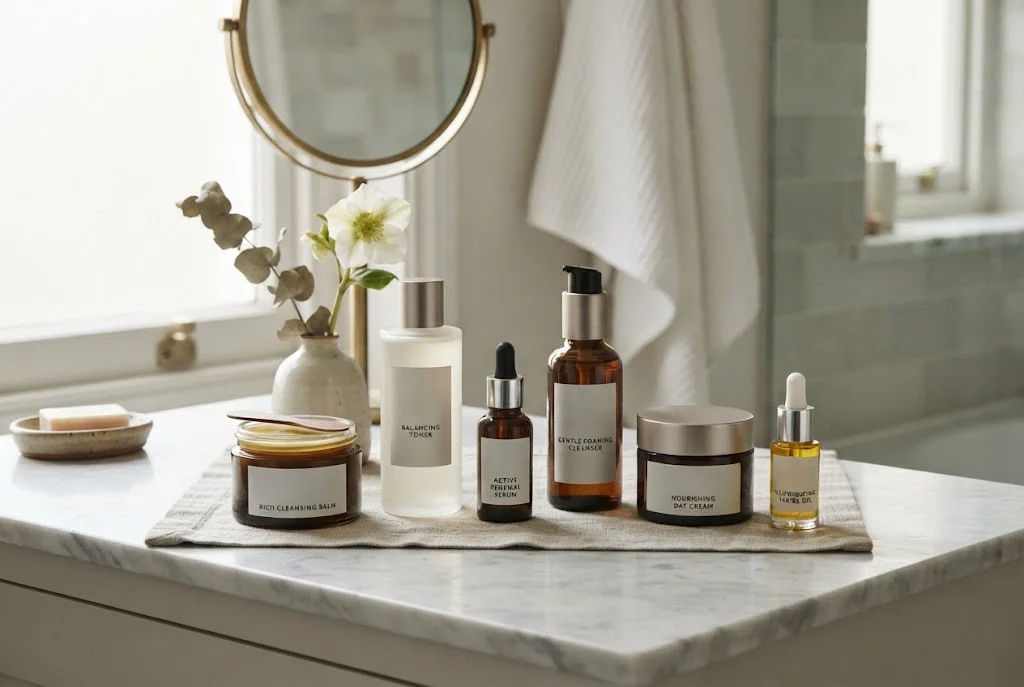
Choosing the right face skincare products can feel overwhelming when beauty shelves are filled with cleansers, serums, moisturisers, toners, masks and oils. The good news is that you do not need every product available to create an effective routine. What matters most is understanding what each product does and choosing formulas that suit your skin.
A sensible routine usually starts with a facial cleanser, moisturiser and daily sun protection. Other products can then be added according to your individual goals, such as improving hydration, managing excess oil or addressing uneven texture. By understanding the purpose of each product, you can build a more practical and personalised approach to skincare.
What Are Face Skincare Products?
Face skincare products are cosmetic and personal-care products formulated for use on the facial skin. They can cleanse, moisturise, condition or provide targeted care depending on their ingredients and formulation.
Facial skin can be more exposed to environmental factors than many other areas of the body, including sunlight, pollution, weather changes and frequent contact with cosmetic products. A suitable routine therefore focuses on maintaining the skin’s cleanliness, comfort and moisture while addressing specific concerns when necessary.
Not every product category is essential for everyone. Your skin type, existing routine, personal preferences and specific concerns should guide your choices.
Which Face Skincare Products Are Essential?
A basic routine does not need to be complicated. Most people can begin with a few core products and introduce additional steps only when there is a clear reason to do so.
Facial Cleanser
A facial cleanser is designed to remove everyday buildup from the skin, including dirt, excess oil, sweat and cosmetic residue. Cleansers come in different textures and formulations, so the most suitable option depends on how your skin behaves.
A gentle cleanser is generally a useful starting point. If your face feels uncomfortably tight or stripped immediately after washing, consider whether your cleanser or cleansing method is too harsh for your skin.
Face Moisturiser
A face moisturiser helps keep the skin feeling comfortable and supports its moisture balance. Moisturisers can range from lightweight gels and lotions to richer creams.
People with dry skin may prefer richer textures, while those with oily or combination skin may favour lighter formulas. However, skin type is not the only consideration. Seasonal changes and personal preference can also influence which moisturiser feels best.
Sun Protection
Although sunscreen is sometimes treated as a separate category, it is an important part of daytime facial skincare. Regular sun protection helps reduce exposure to ultraviolet radiation.
When selecting a facial sunscreen, look for appropriate SPF and UVA protection. The NHS recommends at least SPF 30 and advises using sunscreen alongside other sun-safety measures such as shade and protective clothing.
Face Serum: Targeted Skincare in Your Routine
A face serum is usually a lightweight product designed to deliver selected ingredients to the skin. Serums can be formulated for different purposes, including hydration, brightening or addressing the appearance of uneven texture.
Because serums vary considerably, there is no single serum that everyone needs. Instead, consider the concern you are trying to address and check the product’s ingredients and instructions.
When adding a new serum, introduce it gradually rather than changing several products at once. This makes it easier to understand how your skin responds.
Do You Need a Face Cream?
A face cream is another type of moisturising product, generally with a richer texture than lightweight lotions or gels. Creams can be particularly appealing when the skin feels dry or when a richer finish is preferred.
However, the words cream, lotion and gel do not by themselves determine whether a product is suitable. Formulation matters. The best choice is one that provides comfortable hydration without creating problems for your particular skin.
What Does Facial Toner Do?
Facial toner has changed considerably over the years. Older toner formulations were often associated with a strong, astringent feeling, while modern toners can serve different purposes and may focus on hydration or conditioning.
Toner is not an essential step for everyone. If your cleanser, moisturiser and other products already meet your needs, you do not necessarily need to add a toner simply because it is part of a traditional routine.
Exfoliator and Facial Exfoliation
An exfoliator is used to help remove dead skin cells from the surface of the skin. Exfoliating products can be physical, chemical or a combination of approaches.
Exfoliation should be approached carefully. Using an exfoliating product too frequently or combining several exfoliating treatments may leave the skin feeling irritated, dry or uncomfortable.
If you already use products containing active ingredients, check their instructions before adding another exfoliating product. A simpler routine can often be easier to manage than repeatedly layering treatments.
When Should You Use a Cleansing Balm?
A cleansing balm is a rich cleanser that can be useful for breaking down makeup, sunscreen and other oil-soluble products. It typically transforms into a more fluid texture when worked into the skin.
Some people use a cleansing balm as the first step of an evening double-cleansing routine, followed by a water-based cleanser. However, double cleansing is not automatically necessary for everyone. If one cleanser effectively removes what you need it to remove without leaving your skin uncomfortable, an additional cleansing step may not be required.
What Is an Essence?
An essence is a lightweight skincare product commonly associated with Korean beauty routines. Depending on its formulation, an essence may focus on hydration, conditioning or preparing the skin for subsequent products.
Like toner, essence is optional rather than a universal skincare essential. It can be a useful addition if you enjoy the texture and find that it works comfortably within your routine.
Face Masks for Occasional Skincare
A face mask can provide an occasional skincare step and comes in many forms. Hydrating masks, clay masks and other formulations are designed around different skincare goals.
Masks should complement your routine rather than replace its basics. If your skin is already sensitive or irritated, introducing strong or drying masks may not be helpful.
Instead, consider what your skin needs before selecting a mask. Someone looking for additional hydration may have different requirements from someone concerned about excess oil.
Is Night Cream Different from Regular Moisturiser?
Night cream generally refers to a moisturising product intended for use during an evening routine. These products may have richer textures because users often prefer a more substantial moisturiser before bed.
You do not necessarily need a separate night cream. A suitable moisturiser may work perfectly well in both morning and evening routines, although people with particular preferences may enjoy using different products at different times.
Where Does Facial Oil Fit Into a Routine?
Facial oil can be used as an additional skincare step when someone wants a richer product or a particular finishing feel. Oils vary significantly, so it is important to consider the formulation rather than assuming all facial oils behave the same way.
For some people, facial oil can be useful during colder or drier periods. For others, the texture may feel too heavy, particularly when the skin is naturally oily. Personal comfort and product suitability should therefore guide its use.
How to Choose Face Skincare Products for Your Skin
Choosing products becomes much easier when you start with your skin’s needs rather than the latest beauty trend. Think about how your skin normally feels and what you are hoping to achieve.
For Dry Skin
Dry skin may feel tight, rough or uncomfortable. Richer moisturising products and gentle cleansing may be preferable. Avoid building a routine around excessive cleansing or frequent aggressive exfoliation.
For Oily Skin
Oily skin may produce more sebum, particularly across the forehead, nose and chin. Lightweight textures can be more comfortable, although oily skin still needs moisturisation.
For Combination Skin
Combination skin can have both oily and dry areas. Rather than treating the entire face identically, consider products and textures that provide balance without leaving particular areas uncomfortable.
For Sensitive Skin
Sensitive skin may react more easily to certain products or environmental conditions. Keeping your routine relatively simple can make it easier to identify potential triggers. Introduce new products one at a time and follow the manufacturer’s instructions.
For a deeper look at choosing routines according to individual needs, explore our guide to skincare for different skin types.
How to Layer Face Skincare Products
Product order can vary depending on the products you use, but a common routine moves from cleansing to lighter treatment products and then moisturising products.
A simple morning routine could involve:
- Facial cleanser
- Serum, if needed
- Moisturiser
- Sun protection
An evening routine might involve removing makeup or sunscreen, cleansing, applying selected treatment products and finishing with moisturiser.
The exact order can depend on the formulation and instructions for individual products. Always follow the directions supplied with the product, particularly when using active ingredients.
How Many Face Skincare Products Do You Actually Need?
There is no ideal number of products that applies to everyone. A beginner may need only a cleanser, moisturiser and sunscreen, while someone with specific concerns may choose to add a serum or another targeted product.
The important distinction is between products that serve a useful purpose and products that are simply being added because they are fashionable. A ten-step routine is not automatically better than a three-step routine.
If you are new to skincare, start with the foundations. Once your routine feels comfortable and consistent, consider whether another product would genuinely address a need.
Skincare Ingredients Matter Too
The product category tells you what a product is designed to do, but its ingredients provide additional information about its formulation. Common skincare ingredients include hyaluronic acid, niacinamide, vitamin C, retinol, salicylic acid and glycolic acid.
These ingredients have different properties and should not simply be combined without considering how the overall routine may affect your skin.
Our dedicated guide to skincare ingredients explores common active and moisturising ingredients in greater detail, making it a useful next step when you want to understand product labels.
Face Skincare Products and Acne-Prone Skin
If you experience frequent breakouts, product selection becomes particularly important. Look for products that are suitable for acne-prone skin and avoid unnecessarily complicated routines.
Gentle cleansing and appropriate moisturisation can still be part of an acne-conscious routine. The NHS recommends avoiding excessive washing and squeezing spots, as these habits can aggravate acne and increase the risk of scarring.
For more focused guidance, our acne skincare guide covers routines and product considerations for blemish-prone skin.
Common Mistakes When Buying Facial Skincare
One common mistake is purchasing products based solely on their popularity. A product can be highly recommended online and still be unsuitable for your skin.
Another mistake is buying several active products simultaneously. If irritation occurs, it becomes difficult to identify which product caused the problem.
It is also easy to confuse a product’s marketing claims with what your skin actually needs. Instead, focus on the product’s purpose, formulation, ingredients and directions.
Finally, remember that skincare is not about achieving perfection. Healthy-looking skin can have pores, texture and occasional blemishes. A good routine should support your skin rather than encourage unrealistic expectations.
Final Thoughts on Face Skincare Products
The best face skincare products are not necessarily the newest or most expensive options. They are the products that suit your skin, perform a useful role and fit comfortably into a routine you can maintain.
Start with the basics, then add products according to genuine needs. A cleanser, moisturiser and suitable sun protection can provide a strong foundation, while serums, masks, exfoliators, oils and other products can be considered when they have a clear purpose.
As you learn more about your skin, you can refine your routine and make more informed choices. For broader guidance, return to our main skincare guide to connect product choices with everyday routines and essential skincare habits.
