

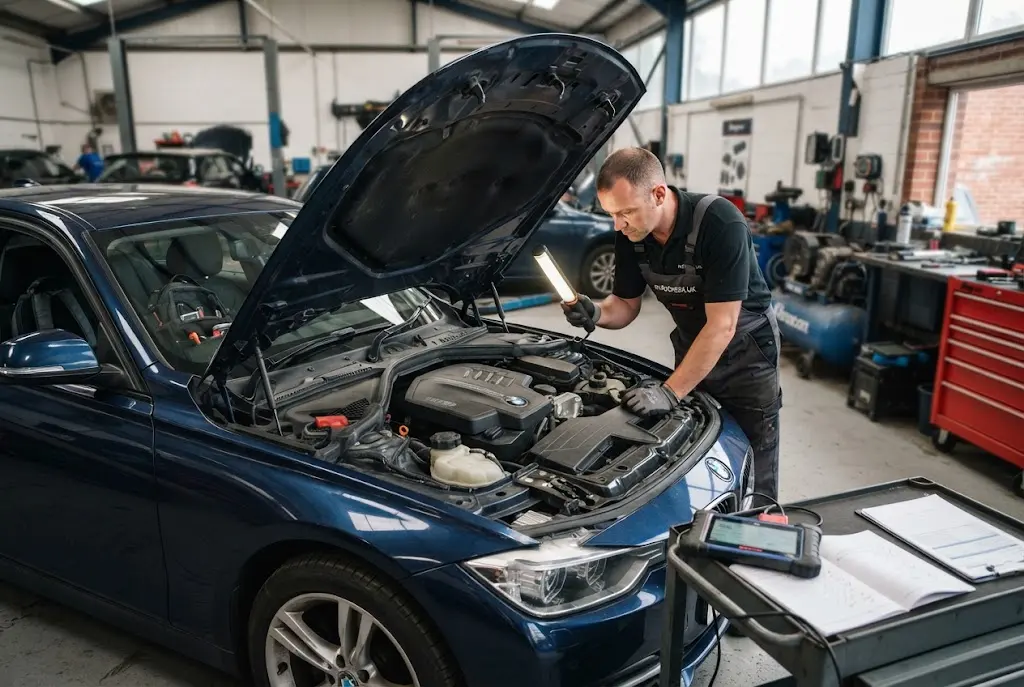
A vehicle inspection can be one of the most useful steps when buying a used car in the UK. A vehicle may look excellent from the outside, drive reasonably well and come with a convincing advert, yet still have mechanical, structural or maintenance issues that are difficult for an ordinary buyer to identify. An independent inspection gives you a more detailed view of the car before you commit your money.
A professional inspection should not replace checking the vehicle’s history, MOT records, paperwork and service information. Instead, it works alongside those checks. Government guidance recommends checking the vehicle’s registration details, MOT history, recall information and V5C log book before buying. A physical inspection then helps you understand the vehicle’s actual condition.
What Is a Vehicle Inspection?
A vehicle inspection is a professional assessment of a car’s condition before or after purchase. Depending on the inspection level, an engineer may examine areas such as the bodywork, engine compartment, brakes, steering, suspension, tyres, electrical systems, interior and underbody before carrying out a road test.
The exact inspection varies between providers. Some checks are relatively basic, while comprehensive packages can examine hundreds of points and provide a detailed written report.
The AA currently offers several vehicle inspection levels, including Basic, Comprehensive and Advanced options. Its current inspection information shows that the checks can cover areas such as tyres, brakes, controls, bodywork and mechanical components, with more detailed packages including photographs or additional diagnostic checks.
The RAC also offers different inspection levels. Its current Comprehensive inspection includes a 307-point mechanical and structural check, interior and underbody checks, bodywork and paint inspection, controls and a road test of up to 10 miles.
Why Get a Pre-Purchase Vehicle Inspection?
The main reason to arrange a pre-purchase inspection is simple: you want to know what you are buying before you hand over your money.
Used cars naturally have some history. Normal wear is expected, but significant faults can create expensive bills shortly after purchase. An inspection may identify problems that are not obvious during a short test drive or visual check.
For example, an engineer may identify signs of previous repairs, corrosion, worn brakes, suspension issues, fluid leaks, tyre problems or other faults. The findings can then help you decide whether the car represents good value.
An independent assessment can also improve your negotiating position. If the inspection identifies work that needs attention, you may choose to ask the seller to resolve it, negotiate on the price or walk away from the purchase altogether.
AA Car Inspection: What Does It Offer?
An AA car inspection is one option available to UK used-car buyers who want an independent assessment. The AA currently offers Basic, Comprehensive and Advanced inspections, with different levels of coverage depending on the package selected.
The AA states that its Basic inspection includes checks of areas such as the exterior, fluid levels, controls, lights and tyres, along with a short road test. Its more detailed inspection options add broader mechanical checks, photographic reporting and other features.
The AA also explains that a vehicle inspection is different from a vehicle history check. A history check focuses on records and background information, while an inspection provides an engineer’s assessment of the vehicle’s physical condition.
This distinction is important because neither type of check tells you everything on its own. A clean history does not guarantee that the vehicle is mechanically perfect, while a good inspection does not necessarily reveal every issue recorded in the vehicle’s past.
RAC Inspection: What Should Buyers Know?
An RAC inspection is another option for buyers who want professional assistance before purchasing a used vehicle. The RAC currently provides Basic, Comprehensive and Advanced inspection packages, with coverage varying according to the package and vehicle.
The RAC says its inspections can include checks of the body exterior, engine compartment, electrical systems, interior, suspension, steering, transmission, wheels, tyres, exhaust and brakes, together with a road test.
The Basic package is intended to identify major mechanical and structural faults, while higher-level inspections provide broader assessments and additional reporting.
When comparing an AA car inspection with an RAC inspection, focus less on the brand name and more on what the specific package covers. Check the inspection points, road-test length, report format, exclusions and whether diagnostic testing is included.
Vehicle Inspection vs Vehicle History Check
A vehicle history check and a physical inspection serve different purposes.
A history check can help identify information such as outstanding finance, theft records, insurance write-off status and potential mileage discrepancies. The AA describes its vehicle history check as a way to investigate the car’s background before purchase.
The physical inspection focuses on the condition of the vehicle itself. An engineer can assess components and systems that cannot be understood simply by looking at a database record.
For this reason, combining both checks can provide a more complete picture. You can also check the vehicle’s official MOT history through GOV.UK, where you can see previous test results, recorded mileage and failures or advisories where available.
What to Check Before Arranging an Inspection
There are several checks you can complete yourself before paying for a professional inspection. They can help you identify obvious problems and decide whether the car is worth investigating further.
Check the registration details
Ask the seller for the registration number and compare the vehicle details with official records. Make sure the make, model and other identifying information are consistent.
Review the MOT history
Look at previous MOT results and recorded mileage. Repeated failures or recurring advisories may highlight areas that deserve closer attention.
Review the service history
A service history can provide useful evidence of how the vehicle has been maintained. Look for invoices, service records and evidence that scheduled maintenance has been carried out.
A missing or incomplete history does not automatically mean a car is bad, but it should encourage you to ask more questions and potentially choose a more thorough inspection.
Check the V5C
GOV.UK advises buyers to check the V5C vehicle registration certificate and ensure that the details match the vehicle and information supplied by the seller. You should also check the vehicle identification number where appropriate.
What Does a Professional Inspection Look At?
The exact checklist depends on the inspection provider, but a detailed assessment can cover a broad range of areas.
Bodywork and structure
The engineer may look for accident damage, corrosion, poor repairs, damaged panels, paint inconsistencies and other signs that the vehicle has previously suffered damage.
Engine and mechanical components
Mechanical checks can identify visible leaks, unusual conditions and other potential problems. More advanced inspections may include diagnostic checks depending on the package.
Brakes and suspension
Brake and suspension condition can have a significant impact on safety and driving behaviour. Worn components may also create repair costs soon after purchase.
Tyres and wheels
Tyres should be checked for tread, damage and uneven wear. Wheel condition can also be relevant, particularly if the vehicle shows signs of vibration or steering problems. Our guide to tyre services and tyre safety explains why tyre condition deserves attention during vehicle ownership.
Interior and controls
An inspection may also cover controls, electrical equipment and interior components. Faults with windows, lights, warning systems or other equipment can be easy to overlook during a rushed viewing.
Road test
A road test can reveal symptoms that are difficult to identify while the car is stationary. Steering behaviour, braking, transmission operation, unusual noises and general driving characteristics may all provide useful information.
What Is a Car Inspection Report?
A car inspection report records the inspector’s findings. Depending on the provider and inspection level, it may include photographs, descriptions of faults, condition assessments, recommendations and details of areas examined.
Read the report carefully rather than focusing only on whether the overall result sounds positive. A used vehicle can have minor wear and still be a reasonable purchase, while one significant structural or mechanical problem could change the decision completely.
If the report identifies repairs, ask the seller or a qualified garage for an estimate of the likely cost. This allows you to assess the vehicle’s purchase price together with its immediate maintenance requirements.
Should You Inspect a Car Bought From a Dealer?
A professional inspection can be useful when buying privately, from an unfamiliar dealer or through other sales channels. It may be particularly valuable when the vehicle is expensive, has limited history or appears unusually cheap.
A dealer may already have carried out its own checks, but you should establish what those checks involved. An independent assessment can provide additional information before you commit to the purchase.
The AA notes that dealer checks can vary and recommends asking what has been inspected and whether a written report is available.
When Is a Vehicle Inspection Especially Important?
Not every used-car purchase carries the same level of risk. Consider arranging an inspection when:
- The car has incomplete or unclear service records.
- The vehicle has had several previous owners.
- The seller cannot clearly explain its maintenance history.
- The asking price seems unusually low.
- You are buying privately.
- The vehicle has significant mileage.
- You notice unusual noises, vibrations or warning lights.
- The car has evidence of previous repairs.
- You are buying an expensive or specialist vehicle.
- You are unfamiliar with the mechanical condition of the model.
The AA specifically highlights situations such as unclear history, private sales and unusually low prices as reasons buyers may want to consider an inspection.
Can a Vehicle Inspection Save Money?
The inspection itself has a cost, so there is no guarantee that it will save money on every purchase. However, the information it provides can help you avoid committing to a vehicle with expensive problems.
Imagine finding a car that appears to be a bargain but requires significant brake, suspension or mechanical work shortly after purchase. Knowing about those problems before buying gives you options. You may negotiate, ask the seller to repair the vehicle or choose another car.
That can be especially valuable when you are already planning your ownership budget. If an inspection identifies likely future repair costs, you can factor them into your decision rather than discovering them after the sale.
For unavoidable repairs after purchase, our guide to repair finance and payment plans explains some of the ways UK motorists may manage larger maintenance bills.
What a Vehicle Inspection Cannot Guarantee
A professional inspection improves your understanding of a vehicle, but it is not a guarantee that the car will remain fault-free after purchase.
Cars contain many components that can develop problems later, and an inspection is performed at a particular point in time. Some faults may be intermittent or impossible to identify during the inspection conditions.
You should therefore treat the report as one important part of the buying decision rather than a guarantee of future reliability. Combine it with the vehicle history, MOT record, service documentation, test drive and your assessment of the seller.
How to Use the Inspection Results
Once you receive the report, separate the findings into practical categories. Some issues may be cosmetic or normal wear, while others may require immediate attention.
Ask the inspector or an independent garage to clarify anything you do not understand. If a repair is recommended, find out whether it is urgent, what it might cost and whether other related components should be checked.
You can then calculate the realistic purchase cost by considering the asking price plus any immediate repairs or maintenance that are likely to be required.
Vehicle Inspection and Confident Used-Car Buying
Buying a used car does not have to mean accepting unnecessary uncertainty. Official checks can establish important information about the vehicle’s records, while a professional inspection provides an expert assessment of its physical condition.
An AA car inspection or RAC inspection can be useful options, but buyers should compare the exact inspection packages rather than assuming every service checks the same areas. The right inspection level depends on the vehicle, its age, condition, history and purchase price.
Most importantly, do not let excitement about a potential bargain rush you into a decision. Take time to review the paperwork, check the history, inspect the vehicle, arrange an independent assessment where appropriate and understand the likely maintenance costs.
Final Thoughts on Vehicle Inspection
A vehicle inspection is not an unnecessary extra when buying the right used car. It is a practical way to gather more information before making a significant financial commitment.
Combine a professional inspection with official MOT records, service history, vehicle history checks and a thorough test drive. If the results reveal problems, use that information to negotiate, request repairs or walk away. If the vehicle passes your checks and the costs make sense, you can move forward with greater confidence.
For official UK guidance on buying a used vehicle, check the government’s used vehicle buying checks before completing the purchase.
