

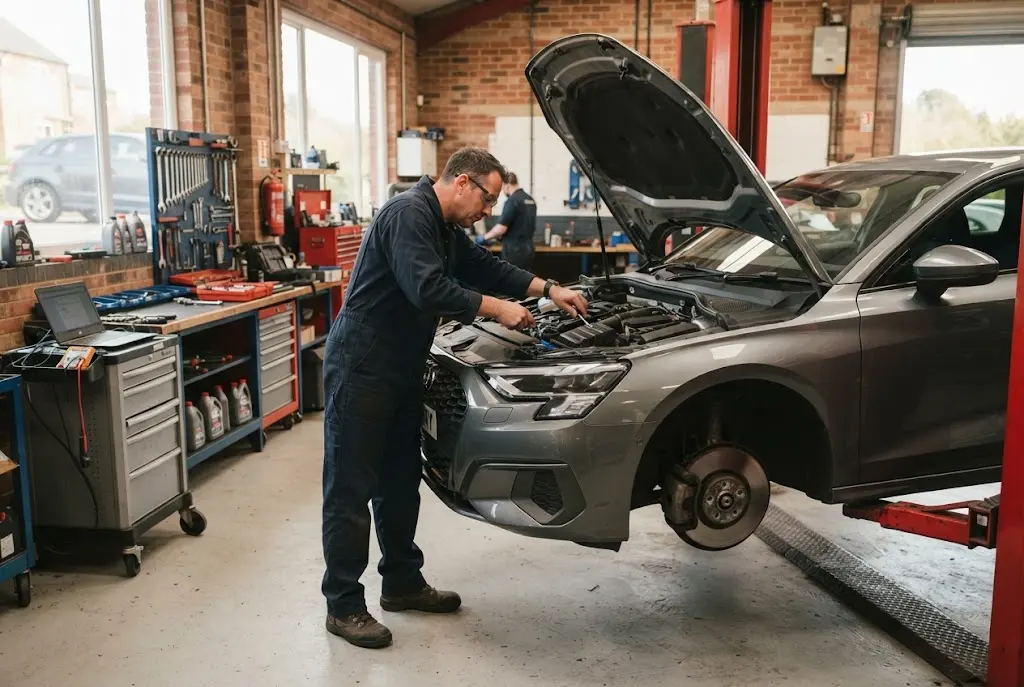
Auto repair services help keep vehicles safe, reliable and roadworthy when components wear out or faults develop. From engine and clutch problems to exhaust, suspension, gearbox and electrical faults, the right repair depends on accurately identifying the underlying issue rather than simply replacing parts.
For UK drivers, understanding common repair types can make it easier to recognise warning signs and decide when professional attention is needed. A strange noise, dashboard warning light, fluid leak, vibration or change in vehicle performance should not automatically be ignored simply because the car is still driveable.
What Are Auto Repair Services?
Auto repair services cover the inspection, diagnosis, repair or replacement of vehicle components that are damaged, worn or malfunctioning. The work can range from relatively straightforward maintenance-related repairs to complex mechanical or electronic fault finding.
A reliable repair process normally starts with identifying the problem. A technician may inspect the vehicle visually, carry out mechanical tests or use diagnostic equipment before recommending a repair.
This distinction matters because the same symptom can have several possible causes. For example, a vibration may be related to tyres, wheels, suspension or drivetrain components. Replacing a part without establishing the cause may not resolve the problem.
When Does a Car Need a Repair?
Some faults are obvious, while others develop gradually. Drivers should pay attention to changes in how their vehicle sounds, feels and performs.
Common warning signs include:
- Unusual knocking, grinding or squealing noises
- Warning lights appearing on the dashboard
- Loss of engine power
- Difficulty starting the vehicle
- Unusual vibrations
- Steering that feels different from normal
- Braking performance changes
- Fluid leaks underneath the vehicle
- Unusual exhaust smoke or smells
- Difficulty selecting gears
If a vehicle develops a serious warning, overheats, loses braking performance or becomes difficult to control, continuing to drive may be unsafe. In such situations, professional advice should be obtained promptly.
Engine Repair
Engine repair can involve many different faults because the engine is made up of numerous mechanical, electrical and supporting systems. Problems may affect starting, acceleration, fuel consumption, temperature control or general performance.
Before carrying out major engine work, a technician may need to establish whether the problem originates from the engine itself or from another related system. Diagnostic testing can help identify stored electronic faults, while physical inspection may be necessary to investigate mechanical symptoms.
Warning signs such as persistent overheating, unusual engine noises, significant oil loss or major changes in performance should be investigated rather than ignored.
Clutch Repair
Manual vehicles rely on the clutch to connect and disconnect the engine from the gearbox. Wear can eventually affect how smoothly the vehicle pulls away or changes gear.
Potential signs of clutch problems include difficulty selecting gears, clutch slip, unusual noises or a change in the feel of the clutch pedal. However, similar symptoms can sometimes be caused by other drivetrain or gearbox-related issues.
Clutch repair should therefore begin with proper diagnosis. Depending on the vehicle and the condition of the components, repair work may involve replacing worn clutch parts rather than attempting to adjust a component that has reached the end of its service life.
Exhaust Repair
The exhaust system manages and directs engine exhaust gases while also helping control emissions and noise. Damage or deterioration can lead to unusual sounds, leaks or changes in vehicle performance.
Exhaust repair may involve addressing damaged sections, mounting components or other parts of the system. A noisy exhaust should not simply be treated as a cosmetic inconvenience, particularly if there is a possibility of an exhaust leak.
If you notice a new exhaust smell inside the vehicle, unusual fumes or a significant change in exhaust noise, seek professional advice.
Suspension Repair
The suspension system contributes to vehicle stability, handling and ride comfort. Components can wear over time, particularly on vehicles regularly driven over uneven roads or with high mileage.
Suspension repair may be required when components become worn or damaged. Symptoms can include excessive bouncing, uneven tyre wear, knocking sounds, poor handling or unusual changes in ride height.
Suspension problems can also affect how the vehicle behaves during braking and cornering. For that reason, unusual handling should be investigated rather than dismissed as normal ageing.
Gearbox Repair
The gearbox transfers engine power to the wheels and allows the vehicle to operate across different speeds and driving conditions. Problems can affect both manual and automatic vehicles.
Gearbox repair may be necessary when a vehicle develops difficulty selecting gears, slipping, unusual noises, delayed engagement or other changes in transmission behaviour.
Transmission problems can sometimes be complicated to diagnose because symptoms may involve several related components. Prompt investigation can help establish whether the issue is caused by fluid, mechanical wear, electronic control systems or another fault.
Electrical Repair
Modern cars depend heavily on electrical and electronic systems. A fault may affect starting, lighting, charging, infotainment, sensors or other vehicle functions.
Electrical repair can therefore range from addressing a battery or charging-system issue to diagnosing a more complex wiring, sensor or electronic-control problem.
Intermittent electrical faults can be particularly difficult to identify. Keep track of when the problem occurs, what systems are affected and whether weather or temperature appears to influence it. These details can help a technician investigate the fault more efficiently.
Body Repairs
Body repairs can address damage caused by collisions, parking incidents, corrosion or general deterioration. Depending on the extent of the damage, work may involve repairing panels, replacing damaged components or restoring the vehicle’s exterior finish.
Not every body issue is purely cosmetic. Damage around structural areas, lights, doors, bonnet mechanisms or other safety-related components can require professional assessment.
If your vehicle has been involved in an accident, avoid assuming that visible damage represents the full extent of the problem. Hidden damage may require inspection before the vehicle is considered safe to use.
Repair Auto Service vs Routine Maintenance
The terms maintenance and repair are sometimes used interchangeably, but they describe different aspects of vehicle care. Routine maintenance aims to keep components operating correctly and address scheduled service requirements. Repairs generally respond to a fault, damage or component that has failed or deteriorated.
Regular vehicle maintenance can help identify developing problems earlier and provides an opportunity to replace service items before they cause wider issues.
However, maintenance cannot prevent every failure. Components have different lifespans, and unexpected faults can occur even when a vehicle has been maintained properly.
How Diagnostics Support Car Repairs
Modern repair auto service work often involves electronic diagnostics as well as traditional mechanical inspection. Diagnostic equipment can retrieve information from vehicle control systems and help technicians investigate warning lights or electronic faults.
A diagnostic scan is not necessarily a complete diagnosis. The information needs to be interpreted alongside the vehicle’s symptoms and additional testing. A fault code can point towards an area requiring investigation without proving that a specific component has failed.
This is why accurate diagnosis is an important part of professional repair work, particularly when dealing with complex modern vehicles.
Choosing the Right Auto Repair Service
When choosing a garage, consider the type of repair your vehicle requires and whether the business has appropriate experience and equipment for that work.
Before authorising repairs, ask the garage to explain:
- What fault has been identified
- What repair is being recommended
- Which components need replacing or repairing
- Whether additional diagnostic work is required
- What the estimated cost includes
- Whether the repair comes with any applicable warranty
- Whether other issues were identified during inspection
Clear communication can make the repair process easier and help you understand which work is essential now and which items can be monitored.
Get an Inspection Before a Major Repair
If the problem is unclear, an inspection can be a useful first step. Auto inspection services can help establish the condition of relevant vehicle systems before repair work is authorised.
This approach can be particularly useful when several symptoms appear at the same time. Rather than replacing individual parts based on assumptions, a structured assessment can help identify the most likely cause.
Drivers preparing for a long journey can also combine professional checks with holiday car preparation to address potential problems before travelling.
Keep Records of Your Repairs
Keeping invoices, repair reports and service information can help you maintain a clear history of the vehicle. Records can show when components were replaced, what faults have previously been investigated and which maintenance work has been completed.
A detailed history may also be useful when the vehicle is eventually sold. It gives a future owner more information about how the car has been maintained and repaired.
Final Thoughts
Auto repair services cover a wide range of mechanical, electrical and bodywork requirements. Engine repair, clutch repair, exhaust repair, suspension repair, gearbox repair, electrical repair and body repairs all require the correct diagnosis and appropriate repair approach.
The most important step is not simply finding a garage that can replace a component. It is making sure the underlying problem is properly investigated. Paying attention to warning signs, keeping up with vehicle maintenance and arranging professional inspections when necessary can help you make informed decisions and keep your vehicle dependable on UK roads.
