

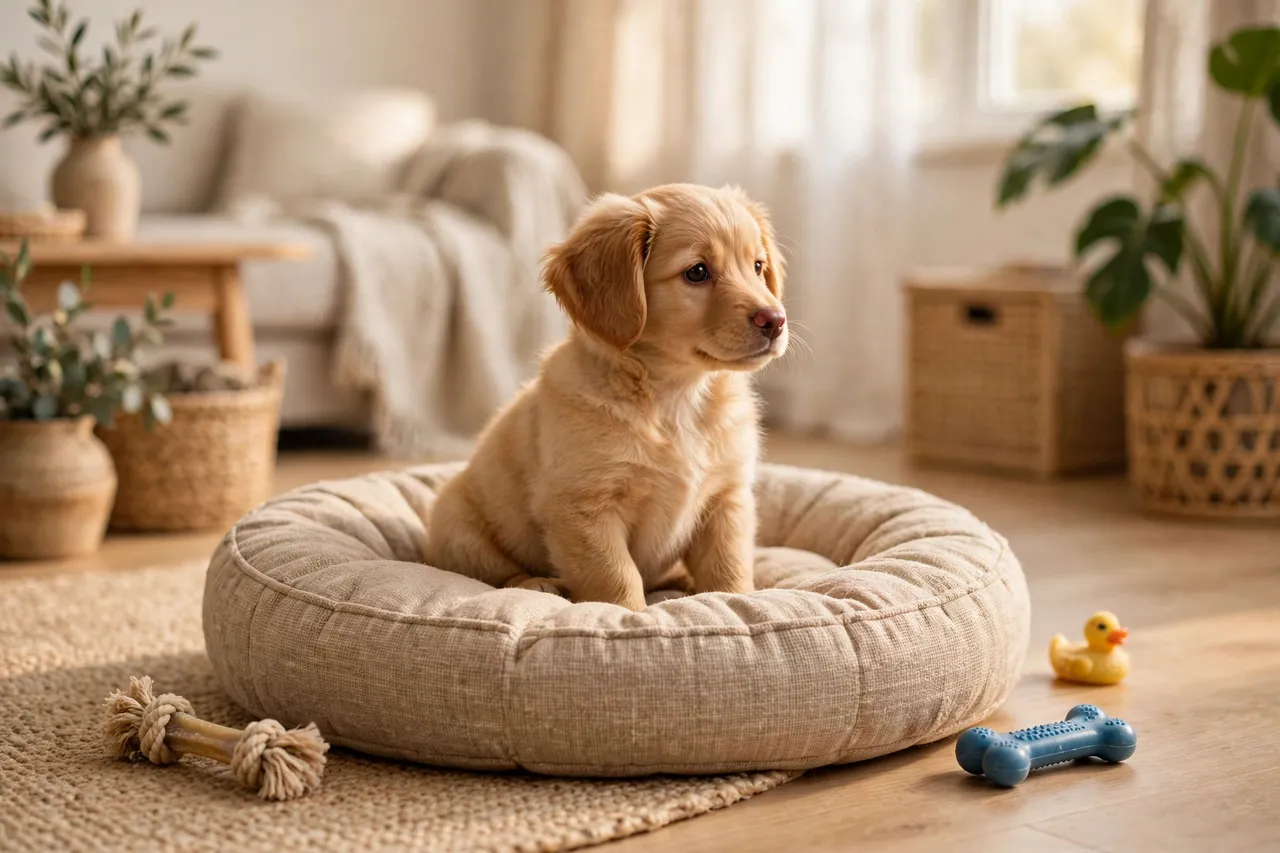
Bringing home a puppy is one of life’s great joys, and also, if we are honest, a small and adorable disruption to everything: your sleep, your shoes, your floors and your routine. The first month sets the tone for the dog your puppy becomes, so it is worth doing thoughtfully rather than winging it. This guide covers what to prepare before arrival day, how to survive the first night, and the feeding, training and vet basics that carry you through the first four weeks.
Before Your Puppy Comes Home
Preparation makes the first days calmer for everyone. Puppy-proof the rooms your puppy will use: lift cables, move shoes and children’s toys out of reach, and check that cleaning products are behind closed doors. Set up a defined sleeping area with a crate or pen, bedding that washes easily, and a couple of safe chew toys. Buy the food your breeder or rescue centre has been feeding, at least for the first week, because sudden diet changes upset small stomachs. You will also want a collar and lead, a harness for first walks later on, puppy pads or a plan for garden access, and an enzyme cleaner for the accidents that will definitely happen.
Think about the household routine the puppy is joining. If your evenings currently wind down with the kind of habits in our guide to creating a relaxing evening routine at home, expect them to change for a while: puppies need a last toilet trip late in the evening and an early start, so build the new rhythm in from day one rather than fighting it.
The First Night
The first night away from their litter is the hardest, and some crying is normal. Keep the puppy’s sleeping area close to you for the first few nights, even if the long-term plan is downstairs, because a puppy who feels safe settles faster and learns to trust the routine. A worn item of your clothing in the bed and a ticking clock or low radio can help. When the puppy cries, wait for a pause before going to them so you do not teach that noise summons company, but do take them out for a toilet break during the night: at eight weeks old, most puppies cannot hold on for more than a couple of hours.
Feeding in the First Month
Young puppies usually eat three to four small meals a day. Keep the breeder’s food initially, then transition gradually over a week if you want to change brands, mixing increasing amounts of the new food each day. Fresh water should always be available. It is tempting to offer endless treats, especially when training, but keep them small and count them as part of the day’s food. Weigh your puppy weekly if you can; steady growth is what you want, and your vet will check weight at the first visit anyway.
Toilet Training Without the Stress
Toilet training is mostly about timing and praise. Take your puppy outside after waking, after meals, after play and at least every hour in between, always to the same spot. Praise immediately and enthusiastically when they go outside. Accidents indoors are information, not naughtiness: if they are frequent, you are not going out often enough. Clean accidents with an enzyme cleaner so the smell does not invite a repeat performance in the same place. Most puppies make real progress within the first month, though full reliability takes longer, and that is fine.
Vet Visits, Vaccinations and Microchipping
Book a vet appointment within the first few days of bringing your puppy home. The vet will check overall health, advise on the vaccination schedule, and talk through worming and flea prevention. By law, puppies must be microchipped by eight weeks of age, which the breeder should have arranged; make sure the chip details are transferred into your name and your contact information is correct. Ask about pet insurance while you are there, and about the right age for neutering, which varies by breed and size. Budgeting for these first-year costs is part of responsible ownership, much like factoring servicing into the running costs described in our guide to everyday car ownership: predictable, planned spending beats surprise bills every time.
Socialisation: The Quiet Priority
Between roughly three and fourteen weeks, puppies are unusually open to new experiences, and what they encounter calmly in this window shapes their confidence for life. That does not mean overwhelming them. Carry your puppy to watch traffic, meet calm vaccinated dogs, hear household noises and meet friendly people of all ages, always at a pace where the puppy stays relaxed. Puppy classes run by qualified trainers are excellent once vaccinations allow. If you are planning family life with your dog, think ahead too: our guide to buying a reliable family car is worth a read before your small puppy becomes a large dog who needs boot space, and our holiday car preparation guide covers the checks that matter once your dog starts joining road trips.
Puppy-Proofing the Home, Properly
Puppies explore the world with their mouths, and kitchens and bathrooms hold the biggest risks: cables, bins, medicines and, occasionally, the plumbing. A chewed flex or a flooded floor is a miserable way to learn, so fit cupboard latches, lift what you can, and know where your water stopcock is before you need it. Our guide to choosing a reliable plumber explains the checks to make in advance, because the day a puppy floods the kitchen is not the day to start comparing quotes.
The first month with a puppy is tiring, funny and over in a flash. Prepare the house, keep routines simple and consistent, get the vet basics done early, and remember that every calm repetition is teaching your puppy how the world works. Do that, and you will finish the month with a dog who trusts you, a routine that works, and only a few shoes lost along the way.
