

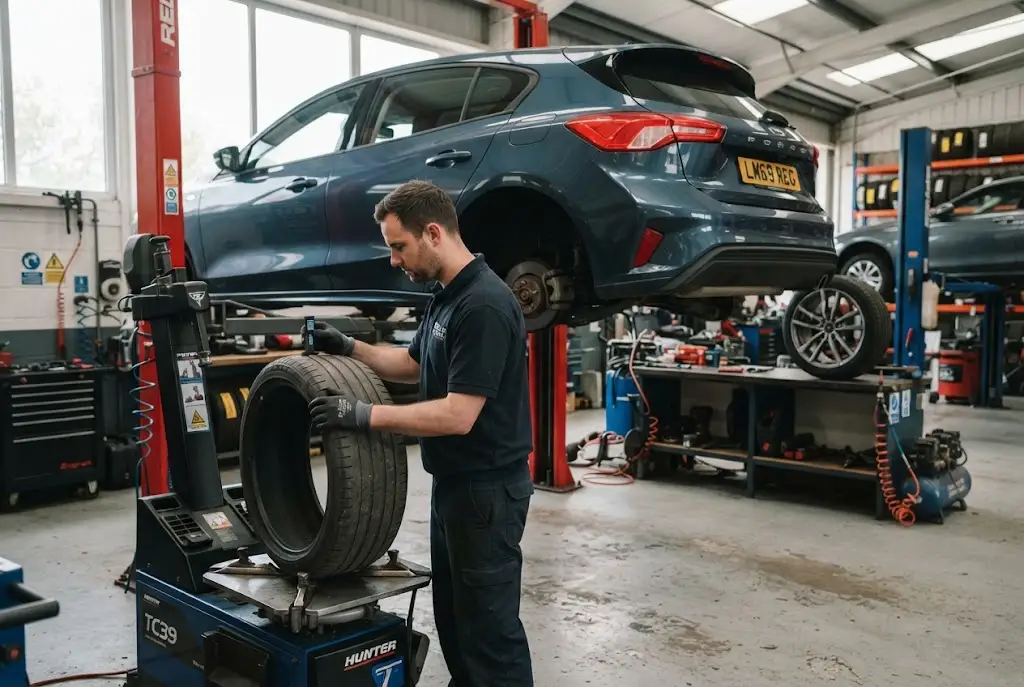
Reliable tyre services can make everyday driving safer, more comfortable and easier to manage. Your tyres are the only part of the car that stays in direct contact with the road, so their condition affects braking, steering, grip, handling and overall road safety. From routine tyre pressure checks and tyre balancing to tyre fitting, repairs and replacement, knowing when to use the right service can help prevent bigger problems later.
For UK drivers, tyre care is also a legal responsibility. Cars, light vans and light trailers must have at least 1.6mm of tread across the central three-quarters of the tyre and around the entire circumference. However, staying just above the legal limit should not be the only goal. Regular inspections can identify damage, uneven wear or pressure problems before they become more serious.
Why Regular Tyre Services Matter
Tyres gradually wear as you drive, but not all wear happens evenly. Braking habits, road surfaces, wheel alignment, tyre pressure, vehicle loading and driving conditions can all affect tyre life. A tyre may also develop a cut, bulge or embedded object that is not immediately obvious from inside the vehicle.
Regular tyre services provide an opportunity to identify these issues and deal with them before they affect the car’s performance. A professional tyre check can also help determine whether a tyre needs a simple adjustment, a repair or complete replacement.
TyreSafe recommends checking tyres at least monthly and before long journeys. Drivers should pay attention to pressure, condition and tread depth rather than relying solely on dashboard warnings or the MOT.
Tyre Fitting: When You Need Professional Installation
Tyre fitting is more than simply removing an old tyre and putting a new one onto a wheel. The tyre needs to be correctly matched to the vehicle and properly installed on the wheel. The fitting process should also include appropriate inflation and checks to ensure the finished installation is safe.
Professional fitting is particularly important when replacing tyres because incorrect installation can create handling or safety problems. Drivers should make sure the replacement tyre is suitable for the vehicle and meets the manufacturer’s requirements.
It is also sensible to have the tyres checked after installation if the vehicle develops vibration, pulling or unusual handling. These symptoms may point to balancing, alignment or another wheel-related issue rather than the tyre itself.
Tyre Repairs: When Can a Damaged Tyre Be Fixed?
Tyre repairs can sometimes be appropriate when a tyre suffers limited damage. However, not every puncture or defect should be repaired. The location and nature of the damage, the condition of the tyre and the extent of any previous damage all matter.
A small puncture does not automatically mean that a tyre is safe to repair. For example, damage to the sidewall can be more serious than a straightforward tread puncture. Cuts, bulges, cracks or other visible defects should be assessed by a qualified tyre professional rather than ignored.
If your tyre has lost pressure suddenly, avoid assuming that adding air solves the problem. A slow leak may indicate a puncture, valve issue, wheel problem or other fault that needs proper inspection.
Tyre Replacement: Knowing When New Tyres Are Needed
Tyre replacement becomes necessary when a tyre is worn beyond a safe level, damaged beyond repair or otherwise unsuitable for continued use. Waiting until a tyre becomes completely bald is not a sensible maintenance strategy.
The UK legal minimum tread depth for car tyres is 1.6mm across the central three-quarters of the tread and around the complete circumference. However, legal compliance is only one part of responsible tyre maintenance. Drivers should also look for uneven wear, cuts, cracks, lumps and bulges.
If one tyre needs replacing, ask the tyre specialist whether another tyre on the same axle is also approaching the end of its useful life. Replacing tyres in suitable pairs can help maintain consistent performance across an axle.
Tyre age and condition can also matter. A tyre that has plenty of tread remaining may still need professional assessment if there are signs of deterioration or damage. Always follow the vehicle and tyre manufacturer’s recommendations where applicable.
Mobile Tyre Fitting for Greater Convenience
Mobile tyre fitting can be useful for drivers who cannot easily visit a traditional tyre centre. Instead of taking the vehicle to a workshop, a mobile service can arrange fitting at an appropriate location, depending on the provider and circumstances.
This can be particularly convenient for busy drivers, fleet operators and people dealing with an unexpected tyre problem. It may also reduce the disruption caused by arranging transport to a tyre centre.
However, mobile fitting is not a substitute for safe roadside behaviour. If you experience a tyre failure in a dangerous location, prioritise your safety and follow appropriate roadside procedures rather than attempting an unsafe repair yourself.
Tyre Balancing and Unusual Vibrations
Tyre balancing helps ensure the wheel and tyre assembly rotates smoothly. When a wheel is out of balance, drivers may notice vibration, particularly at certain speeds.
Vibration does not always mean the tyre itself is faulty. Wheel imbalance, uneven tyre wear, wheel damage, alignment problems and other mechanical issues can produce similar symptoms. That is why persistent vibration should be professionally investigated rather than simply ignored.
Balancing can be especially relevant after fitting new tyres. If the vehicle feels smooth before a tyre change but develops noticeable vibration afterwards, returning to the fitting provider for an inspection may be appropriate.
Tyre Pressure: A Simple Check With a Big Impact
Correct tyre pressure is one of the easiest aspects of tyre maintenance to overlook. Incorrect pressure can affect handling, grip, braking, tyre wear and fuel consumption.
Under-inflated tyres can flex more than intended and may wear faster, while over-inflation can reduce the tyre’s contact area with the road and affect handling. Neither situation is ideal for everyday driving.
The correct pressure for your vehicle should come from the manufacturer’s recommended settings. Depending on the car, this information may be found in the handbook, inside the fuel filler area or on a plate around the driver’s door area. Pressure requirements can also change depending on the load being carried.
TyreSafe recommends checking tyre pressures regularly, including before long journeys. If your car has a Tyre Pressure Monitoring System, remember that it is a warning system rather than a replacement for routine physical tyre checks.
Simple Tyre Safety Checks You Can Do at Home
You do not need specialist equipment to perform several basic tyre safety checks. Making these checks part of your normal vehicle routine can help you identify problems early.
Check the tread
Look across the tread and check for excessive wear. A tread depth gauge provides a more precise measurement, while the familiar 20p test can be used as a simple indication of whether the tread may be approaching the legal limit.
Look for visible damage
Inspect the sidewalls and tread for cuts, cracks, bulges and objects lodged in the tyre. A bulge can indicate internal damage and should be assessed by a professional.
Check tyre pressure
Use an accurate pressure gauge and compare the reading with the manufacturer’s recommended pressure. Check the tyres when they are cold for a more meaningful reading.
Watch for uneven wear
Uneven wear can indicate that something else needs attention. Alignment, suspension, wheel balance or incorrect pressure can all contribute to abnormal tyre wear, so recurring problems should be investigated rather than repeatedly treating the tyre as the only issue.
Tyre Safety Before a Long Journey
A few minutes of preparation can make a difference before a motorway journey, holiday trip or long-distance drive. Check the tyre pressure, inspect the tread and look around each tyre for visible damage.
If the vehicle is heavily loaded with passengers and luggage, check whether the manufacturer specifies a different pressure for that load. Also make sure you understand what emergency equipment your vehicle carries, such as a spare wheel, compressor or puncture repair kit.
Do not ignore a warning light or an obvious change in vehicle behaviour. If the steering feels unusual, the car pulls to one side, a vibration develops or a tyre repeatedly loses pressure, arrange a professional inspection.
How Tyre Services Can Help Prevent Bigger Costs
Tyre maintenance is closely connected to wider vehicle maintenance. A damaged or incorrectly inflated tyre can wear faster, while recurring tyre problems may point to an underlying wheel or suspension issue.
That is why it is useful to treat tyre services as part of a broader maintenance routine rather than an emergency-only expense. Catching a problem early can make it easier to understand what needs fixing and reduce the chance of an unexpected breakdown.
If an unexpected vehicle repair does become necessary, understanding your options for spreading costs can also help with budgeting. Our guide to repair finance and payment options can provide useful context when an essential repair arrives at an inconvenient time.
Tyres When Buying a Used Car
Tyres can also provide useful clues when inspecting a used vehicle. Uneven tread wear, mismatched tyres, visible damage or tyres approaching replacement can indicate future maintenance costs.
However, tyres should not be assessed in isolation. A proper vehicle inspection before buying a used car can provide a broader view of the vehicle’s mechanical condition and help you make a more informed decision.
When Should You Book Tyre Services?
There is no single schedule that applies to every vehicle because tyre wear depends on mileage, driving style, road conditions, vehicle type and tyre specifications. Nevertheless, regular visual checks and pressure checks should form part of normal car ownership.
You should arrange professional attention when you notice a puncture, repeated pressure loss, unusual vibration, steering changes, uneven wear, a bulge, significant cuts or tread approaching the legal minimum.
It is also sensible to arrange tyre services when replacing tyres, after certain wheel-related problems or whenever you are unsure whether a tyre remains safe to use.
Tyre Services: A Practical Approach to Safer Driving
Good tyre care does not have to be complicated. Regular pressure checks, visual inspections and tread checks can help you spot problems early, while professional tyre fitting, repairs, balancing and replacement provide the specialist support needed when an issue develops.
The key is not to wait until a tyre fails before paying attention to it. By making tyre safety part of your normal vehicle routine, you can improve your awareness of tyre condition, reduce avoidable maintenance problems and drive with greater confidence.
For authoritative UK guidance on tyre safety, tread depth and pressure, consult TyreSafe’s tyre safety guidance alongside your vehicle manufacturer’s recommendations.
