

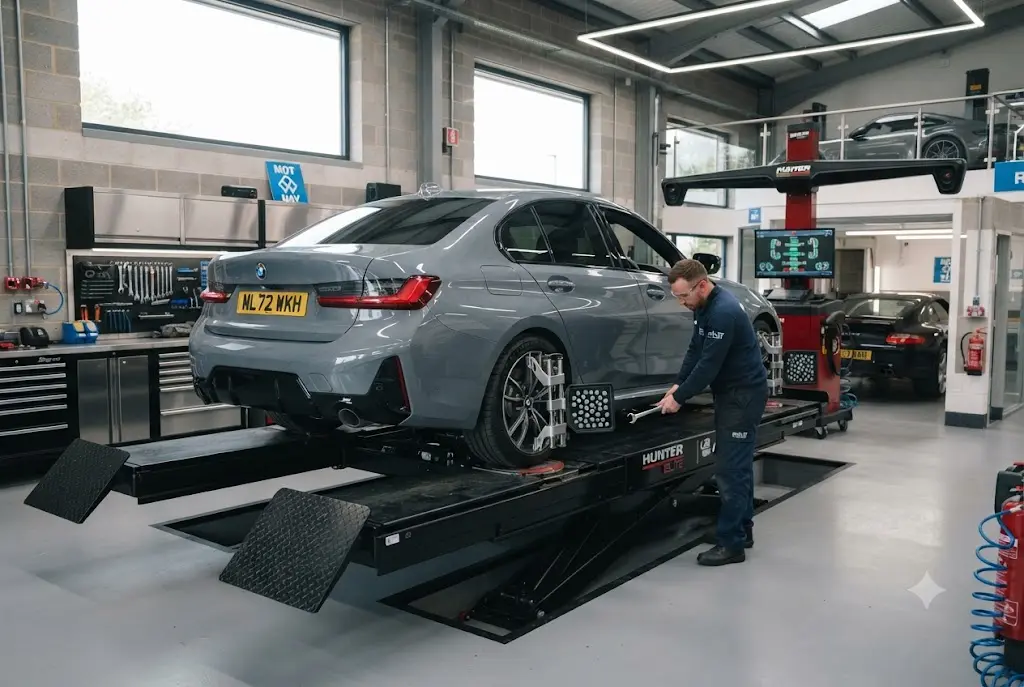
Wheel alignment is an important part of vehicle maintenance that can affect steering, tyre wear, handling and driving comfort. When your wheels are correctly aligned, the vehicle should track properly and the tyres should maintain appropriate contact with the road. Misalignment can develop after hitting potholes or kerbs, following suspension repairs, or simply as components and roads take their toll. Understanding the warning signs can help UK drivers deal with problems before they lead to unnecessary tyre wear or more expensive repairs.
What Is Wheel Alignment?
Wheel alignment is the process of checking and, where possible, adjusting the angles of a vehicle’s wheels so they meet the manufacturer’s specifications. It is sometimes described as wheel tracking or steering alignment, although the exact terminology can vary between garages.
Modern alignment equipment measures the position and angles of the wheels and compares them with the vehicle manufacturer’s specifications. Depending on the vehicle, technicians may assess measurements including toe, camber and caster.
The purpose is not simply to make the steering wheel look straight. Correct alignment helps the vehicle travel predictably, supports even tyre wear and contributes to stable handling.
Why Wheel Alignment Matters
Correct alignment helps tyres meet the road as intended. When the geometry is outside the appropriate range, a vehicle can behave differently and the tread may wear unevenly.
TyreSafe describes wheel alignment as an important part of tyre safety because correct wheel angles help maintain appropriate road contact and predictable handling. Misalignment can contribute to accelerated tyre wear and degraded handling. TyreSafe’s wheel alignment guidance provides further information on why alignment matters.
Alignment is therefore not just a comfort issue. It can influence how confidently a vehicle responds to steering inputs and how efficiently its tyres wear over time.
Common Signs You Need Wheel Alignment
Misalignment is not always obvious immediately. However, several symptoms can indicate that your vehicle should be inspected.
Uneven Tyre Wear
Uneven tread wear is one of the clearest signs that something may be wrong with the vehicle’s wheel geometry. You may notice more wear on one edge of a tyre than the other, or a difference between tyres on the same axle.
Do not automatically assume that uneven wear is caused by alignment. Incorrect tyre pressures, worn suspension components and other mechanical problems can also affect tyre wear. A proper inspection can help identify the underlying cause.
The Car Pulls to One Side
If your car consistently moves towards the left or right when you are travelling on a suitable straight road, it may require an alignment check.
Road surfaces themselves can have a noticeable slope, so a slight tendency to move one way does not automatically prove that the alignment is incorrect. However, persistent or pronounced pulling deserves attention.
The Steering Wheel Is Off-Centre
If the steering wheel remains noticeably crooked while the vehicle is travelling straight, wheel alignment may need checking.
An off-centre steering wheel can also occur after steering or suspension work, so tell the technician about any recent repairs when booking an inspection.
Steering Feels Unusual
A vehicle that feels less stable or predictable through corners may need further inspection. Alignment is one possible cause, but steering and suspension components can also contribute to handling changes.
Unusual Tyre Noise
Uneven tyre wear can sometimes produce unusual road noise. If a tyre develops an irregular wear pattern, the noise may become more noticeable as speed increases.
Any unusual noise should be investigated rather than automatically attributed to alignment.
What Causes Wheel Misalignment?
Several factors can affect wheel geometry. One of the most common causes is an impact with a pothole or kerb.
UK roads can expose vehicles to potholes, uneven surfaces and road debris. A significant impact can affect alignment or damage a steering or suspension component.
Other possible causes include:
- Worn steering or suspension components
- Accidental impacts with kerbs
- Major pothole impacts
- Changes following suspension repairs
- Incorrectly adjusted components
- Normal wear in components over time
- Accident or collision damage
Because alignment problems can sometimes be a symptom of another mechanical issue, a reputable garage should inspect the relevant components rather than simply adjusting the alignment without checking the vehicle.
Wheel Alignment vs Wheel Balancing
Wheel alignment and wheel balancing are different services, even though both can affect how a vehicle drives.
The Wheel alignment concerns the angles and geometric relationship of the wheels relative to the vehicle and manufacturer specifications. Wheel balancing concerns the distribution of weight around the wheel and tyre assembly so that it rotates smoothly.
TyreSafe explains that an unbalanced wheel can cause vibration, particularly at higher speeds, while incorrect tracking can contribute to uneven tyre wear and affect how the vehicle travels in a straight line.
That distinction is useful when describing symptoms to a garage. A steering vibration does not automatically mean the alignment is wrong, just as uneven tyre wear does not automatically mean the wheel is unbalanced.
What Is Wheel Tracking?
Wheel tracking is a term commonly used for alignment work, particularly when discussing the direction in which the wheels point.
If a garage says that your tracking is out, it generally means the wheel alignment needs checking or adjustment. TyreSafe’s explanation for drivers also uses tracking in this context, describing it as an issue where the wheels are not pointing in the correct direction.
However, motorists should ask what measurements the garage is checking. A complete alignment service may involve more than simply adjusting the front wheels.
What Happens During a Wheel Alignment?
A professional alignment starts with an inspection. The technician may check the tyres, steering and suspension components before measuring the wheel angles.
Specialist alignment equipment is then attached to the wheels or positioned around the vehicle. The system measures the current geometry and compares it with the manufacturer’s specifications.
If adjustments are possible and necessary, the technician makes the appropriate changes. The vehicle is then measured again to confirm the results.
The exact process varies between vehicles and garages. Some vehicles require four-wheel alignment measurements, while the appropriate adjustment procedure depends on the manufacturer’s design.
When Should You Get Your Alignment Checked?
There is no single interval that applies to every vehicle. Alignment should be checked when symptoms appear and after events that could reasonably affect the vehicle’s geometry.
Consider an alignment check if:
- Your car pulls noticeably to one side.
- The steering wheel is off-centre when travelling straight.
- Your tyres show uneven or unusual wear.
- You have hit a significant pothole or kerb.
- You have had steering or suspension components replaced.
- The vehicle has been involved in an accident.
- The handling feels different from normal.
RAC guidance also recommends checking alignment when symptoms such as uneven tyre wear or pulling occur and after significant impacts such as hitting a pothole or kerb.
Wheel Alignment After New Tyres
New tyres do not automatically mean that every vehicle needs an alignment adjustment. However, checking alignment can be worthwhile when tyres are replaced, particularly if the previous tyres showed uneven wear.
Fitting new tyres without addressing an existing alignment problem can allow the same uneven wear pattern to develop again.
If the old tyres show unusual wear, ask the tyre fitter or garage to inspect the vehicle’s alignment and suspension before assuming that the tyres were simply defective.
Wheel Alignment and Tyre Wear
Tyres are designed to wear progressively across their tread when the vehicle’s geometry, inflation and mechanical condition are appropriate.
Misalignment can cause certain areas of the tread to experience greater stress. Over time, this can shorten tyre life and make the vehicle less predictable.
Regularly inspecting your tyres can therefore provide an early warning. Look across the full tread rather than only checking the visible outside shoulder. If possible, check for differences between the inner and outer edges as well.
For more information about choosing a suitable garage for inspections and repairs, see our garage reviews guide, which explains how to compare customer feedback, service quality and local garage options.
Does Wheel Alignment Affect Fuel Economy?
Incorrect alignment can increase rolling resistance or make the vehicle work less efficiently, although fuel or energy consumption depends on many factors.
Driving style, tyre pressure, road conditions, vehicle load, weather and traffic can all influence consumption. Therefore, a small change in fuel economy should not automatically be blamed on wheel alignment.
Nevertheless, maintaining the vehicle according to the manufacturer’s specifications is a sensible way to support efficient operation.
Wheel Alignment for Electric and Hybrid Cars
Alignment is important for electrified vehicles as well as conventional cars. Tyres remain the only components connecting the vehicle to the road, regardless of the powertrain.
Electric vehicles can have substantial battery weight and strong instant torque, which makes appropriate tyre care particularly important. TyreSafe’s EV guidance highlights the importance of alignment and balancing for electric vehicles and recommends regular checks.
Hybrid vehicles also need appropriate tyre and steering maintenance. If you own a hybrid, our hybrid servicing guide explains the wider maintenance considerations for electrified vehicles.
For fully electric cars, our EV servicing guide covers battery care, EV garages, high-voltage systems and other maintenance considerations.
How Much Does Wheel Alignment Cost?
Wheel alignment cost varies according to the vehicle, the garage, the location and the type of alignment required.
As a current UK reference point, RAC’s published guidance gives a typical range of around £75 to £115 for a standard alignment, while four-wheel alignment can cost £100 or more. Actual prices vary, and motorists should check what is included in the quoted service.
The final bill can be higher if the inspection identifies worn suspension or steering components that need replacing before the alignment can be completed correctly.
When comparing quotes, ask whether the price includes the initial measurement, adjustments and final measurement. A cheap headline price may not represent the same service as a more comprehensive alignment check.
Can Alignment Be Fixed If Suspension Parts Are Worn?
Sometimes an alignment cannot be set correctly until an underlying mechanical problem has been repaired.
For example, worn suspension or steering components can prevent the vehicle from maintaining the required geometry. In such cases, adjusting the alignment without repairing the faulty component may provide only a temporary result.
A professional technician should explain what has been found and why additional work is necessary. If the repair is expensive, ask for a clear quotation before authorising the work.
Choosing a Garage for Wheel Alignment
Not every garage offers the same alignment equipment or service. When choosing a workshop, consider whether it has modern alignment equipment and whether technicians can access the correct specifications for your vehicle.
Ask whether the service covers the wheels that need to be measured and adjusted. For some vehicles, checking all four wheels can provide a more complete picture than concentrating only on the front axle.
It is also worth checking customer feedback. Look for reviews that specifically mention tyre fitting, alignment, steering or suspension rather than relying solely on general five-star ratings.
If you are comparing national networks and local businesses, our UK garage chains comparison provides additional context on major garage networks and the types of services they offer.
What to Ask Before Paying for Alignment
A few straightforward questions can help you understand what the garage has done.
- Which alignment measurements were outside specification?
- Which wheels required adjustment?
- Were any steering or suspension problems identified?
- Were the manufacturer’s specifications used?
- Was the alignment checked again after adjustment?
- Did the tyres show evidence of previous uneven wear?
- Is any additional repair recommended?
A reputable garage should be able to explain the result without relying on unnecessary technical jargon.
Why Smoother Driving Starts With Correct Alignment
A vehicle with appropriate wheel geometry should feel predictable when accelerating, braking and cornering. Correct alignment can also help tyres wear more evenly, reducing the likelihood of replacing them prematurely because of an avoidable wear pattern.
It is not a cure for every handling problem, but it is an important part of diagnosing changes in steering and tyre behaviour.
If your vehicle suddenly feels different after hitting a pothole or kerb, do not ignore the change. A relatively simple inspection can establish whether alignment or another component needs attention.
Final Thoughts
Wheel alignment is a relatively straightforward maintenance service, but its impact on tyre wear, steering and handling makes it worth taking seriously. Pulling to one side, an off-centre steering wheel and uneven tyre wear are all reasons to consider an inspection.
Wheel tracking and wheel balancing are not the same thing, so the symptoms should be assessed properly rather than assuming every vibration or tyre problem has one cause. Choosing a garage with suitable alignment equipment and qualified technicians can also make a significant difference.
For UK drivers, regular tyre checks combined with sensible alignment inspections can help support safer, smoother driving and make better use of the tyres already fitted to the vehicle.
