

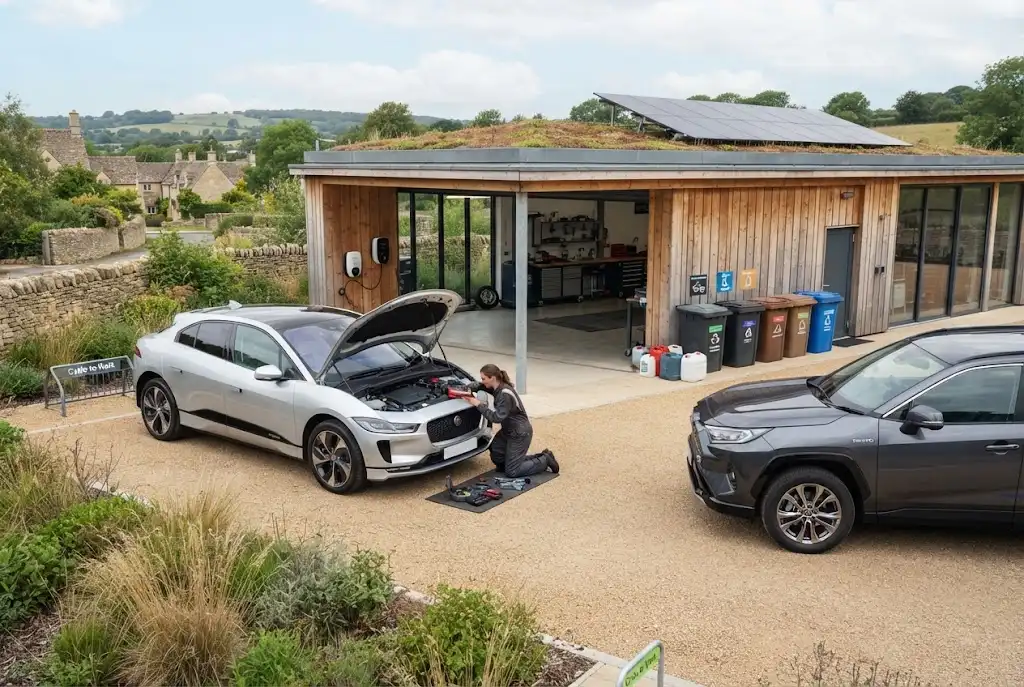
Sustainable vehicle care is about maintaining and using a car in ways that can reduce unnecessary waste, improve efficiency and extend the useful life of the vehicle. It does not mean that every driver needs to replace a conventional car immediately or make major changes overnight. Simple maintenance decisions, efficient driving habits and responsible disposal of vehicle components can all contribute to more sustainable car ownership.
As the UK vehicle market continues to include petrol, diesel, hybrid and electric models, responsible car care increasingly involves understanding the different maintenance requirements of each type. The most sustainable approach is often to look after the vehicle you already have, use it efficiently and replace components responsibly when they reach the end of their useful life.
What Is Sustainable Vehicle Care?
Sustainable vehicle care combines responsible maintenance with driving and disposal practices that aim to reduce unnecessary environmental impact. It can include keeping a vehicle properly maintained, avoiding premature component replacement, improving fuel efficiency and ensuring batteries, tyres, fluids and other parts are handled responsibly.
Good maintenance is important because neglected vehicles can develop mechanical problems that affect efficiency and reliability. Addressing issues early can also help prevent a relatively small fault from causing additional damage to other components.
Sustainable ownership therefore starts with a straightforward principle: maintain the vehicle properly, use resources sensibly and make decisions based on the actual condition and requirements of the car.
Why Regular Maintenance Supports Sustainable Car Ownership
Regular maintenance is not only about preventing breakdowns. It can also help a vehicle operate as intended. Correct tyre pressures, appropriate servicing and prompt attention to mechanical faults can all contribute to efficient vehicle operation.
A neglected car may develop problems that affect performance, although the effect depends on the specific fault and vehicle. For example, incorrect tyre pressure can influence rolling resistance, while certain engine or emissions-related faults can affect how efficiently a vehicle operates.
This is why routine vehicle maintenance should form the foundation of sustainable car ownership. Following the manufacturer’s maintenance recommendations is generally more useful than relying on generic servicing intervals that may not apply to your vehicle.
Hybrid Servicing Requires the Right Approach
Hybrid servicing differs from conventional vehicle maintenance because a hybrid combines an internal combustion engine with an electric propulsion system. The exact design varies between manufacturers and models.
Hybrid vehicles still require appropriate maintenance of conventional mechanical components, but they also contain high-voltage electrical systems and other specialised components. Servicing should therefore be carried out by technicians with the appropriate training and equipment for the vehicle.
Drivers should follow the manufacturer’s recommended service schedule and pay attention to warning lights or changes in vehicle behaviour. Do not attempt to work on high-voltage systems without the required training and safety procedures.
Responsible hybrid ownership also means understanding that the presence of an electric motor does not eliminate the need for routine maintenance. Tyres, brakes, suspension, cooling systems and other components can still require inspection and servicing.
EV Maintenance: What Electric Cars Still Need
EV maintenance is different from maintaining a petrol or diesel vehicle because a fully electric car does not have many of the same engine-related components. However, electric vehicles still require appropriate servicing and inspections.
Depending on the model, maintenance can include tyres, brakes, suspension, steering, cooling systems, cabin filters and other vehicle components. The high-voltage battery and electrical systems also require specialist attention when necessary.
Regenerative braking can influence brake usage because the electric motor can help slow the vehicle, but this does not mean the conventional braking system can be ignored. Brake components still need appropriate inspection and maintenance.
Owners should always follow the manufacturer’s servicing recommendations and use appropriately trained technicians for work involving high-voltage systems.
Keep Your Tyres Properly Maintained
Tyres are an important part of both vehicle safety and efficiency. Incorrect pressure can affect handling, tyre wear and rolling resistance.
Check tyre pressures according to the manufacturer’s recommended figures and inspect the tyres for visible damage and abnormal wear. The correct pressure may differ depending on vehicle load, so check the information provided for your particular car.
Replacing tyres before they are necessary does not make sense from a sustainability perspective, but continuing to use tyres that are damaged or unsuitable is not responsible either. The goal is to maintain them correctly and replace them when they genuinely require replacement.
Fuel-Efficient Maintenance for Petrol and Diesel Cars
Fuel-efficient maintenance can help conventional vehicle owners make sensible use of their existing cars. Maintaining the vehicle according to the manufacturer’s recommendations and addressing faults promptly can support normal operating efficiency.
Drivers should also avoid unnecessary weight where practical and make sure tyres are correctly inflated. However, fuel consumption is affected by many factors, including driving style, traffic, road conditions, vehicle load, weather and journey type.
It is therefore better to view maintenance as one part of an overall efficiency strategy rather than expecting one repair or maintenance task to produce a dramatic change in fuel consumption.
Green Driving Habits Matter Too
Green driving involves using a vehicle thoughtfully and avoiding unnecessary energy consumption. Smooth acceleration, sensible speed management and avoiding unnecessary idling can all support more efficient driving, although the exact effect depends on traffic and road conditions.
Planning journeys can also make a difference. Combining several errands into one trip may reduce unnecessary travel, while choosing public transport, walking or cycling for suitable short journeys can avoid using the car altogether.
For longer journeys, planning the route and allowing enough time can help avoid unnecessary detours and stressful driving. Drivers should never sacrifice safety in an attempt to maximise efficiency.
Choose Eco-Friendly Servicing Responsibly
Eco-friendly servicing does not simply mean choosing a garage that uses the word “green” in its marketing. Look for practical evidence of responsible waste handling, appropriate recycling processes and sensible resource management.
Vehicle servicing can involve used oil, filters, batteries, tyres, packaging and other materials that require appropriate disposal or recycling. Ask a garage how it handles relevant waste if environmental practices are an important part of your decision.
At the same time, the quality and safety of the maintenance work should remain the priority. A poorly completed repair is not sustainable simply because it was advertised as environmentally friendly.
Battery Recycling and Responsible Disposal
Battery recycling is an important consideration as more vehicles use increasingly sophisticated battery systems. Conventional 12-volt batteries and high-voltage hybrid or EV batteries have different characteristics and should be handled through appropriate channels.
Never dispose of vehicle batteries with ordinary household waste. If a battery needs replacing, ask the garage, retailer or appropriate recycling service how the old unit will be handled.
Electric vehicle batteries can contain valuable materials, and responsible end-of-life management can support recovery and recycling. However, damaged or high-voltage batteries require specialist handling because they can present significant safety risks.
Maintain Rather Than Replace Too Early
One of the simplest sustainable ownership principles is to avoid replacing a vehicle or major component without a genuine reason. A well-maintained car can remain useful for many years, although the economic and environmental balance varies between individual vehicles.
When a repair is possible and economically sensible, repairing an existing component may avoid the resources involved in unnecessary replacement. However, safety-critical components should always be replaced when they are no longer suitable for continued use.
Professional assessment can help determine whether a problem requires repair, replacement or further investigation. If your vehicle develops a fault, auto repair services can help identify the appropriate solution.
How to Find Environmentally Responsible Garages
Environmentally friendly garages may demonstrate their approach through practical measures rather than broad claims. When choosing a garage, consider whether it follows responsible waste-disposal procedures, uses appropriate recycling channels and has technicians with the correct training for your vehicle type.
For hybrids and EVs, specialist knowledge is particularly important. A garage that understands the specific requirements of your vehicle can carry out maintenance safely while avoiding unnecessary work.
You can also ask whether replaced components are returned, recycled or disposed of appropriately where relevant. Clear answers can help you understand how the business approaches resource management.
Sustainable Vehicle Care for Older Cars
Sustainable car ownership is not limited to new EVs and hybrids. Older petrol and diesel vehicles can also benefit from responsible maintenance.
Keeping an older car properly serviced can help preserve its useful life. However, drivers should consider the condition, efficiency, repair requirements and overall suitability of the vehicle rather than assuming that keeping any car indefinitely is automatically the most sustainable option.
When a vehicle requires increasingly frequent or expensive repairs, a broader assessment may be appropriate. Decisions about replacing a car should consider its actual condition, expected future use and the alternatives available to the owner.
Build a Sustainable Car Care Routine
A practical routine can make environmentally responsible ownership easier. Consider these habits:
- Follow the manufacturer’s maintenance schedule.
- Check tyre pressures regularly.
- Address warning lights and unusual symptoms promptly.
- Avoid unnecessary idling and aggressive acceleration.
- Combine suitable journeys where practical.
- Keep unnecessary weight out of the vehicle.
- Use qualified technicians for specialist hybrid and EV work.
- Dispose of batteries and vehicle fluids through appropriate channels.
- Choose repair over replacement when safe and economically sensible.
- Keep maintenance and repair records for the vehicle.
These steps are relatively simple, but together they create a more thoughtful approach to vehicle ownership.
Final Thoughts
Sustainable vehicle care is less about finding a single perfect solution and more about making sensible decisions throughout the life of a vehicle. Regular maintenance, efficient driving, responsible repairs and appropriate recycling can all play a role.
Whether you drive a petrol car, diesel vehicle, hybrid or EV, maintaining it properly remains important. Follow the manufacturer’s guidance, use appropriately qualified professionals for specialist work and dispose of vehicle components responsibly.
For drivers looking to improve their overall approach to car ownership, sustainability works best alongside practical maintenance rather than replacing it. A well-maintained vehicle, sensible driving habits and responsible end-of-life decisions can create a more balanced approach to modern car ownership.
