

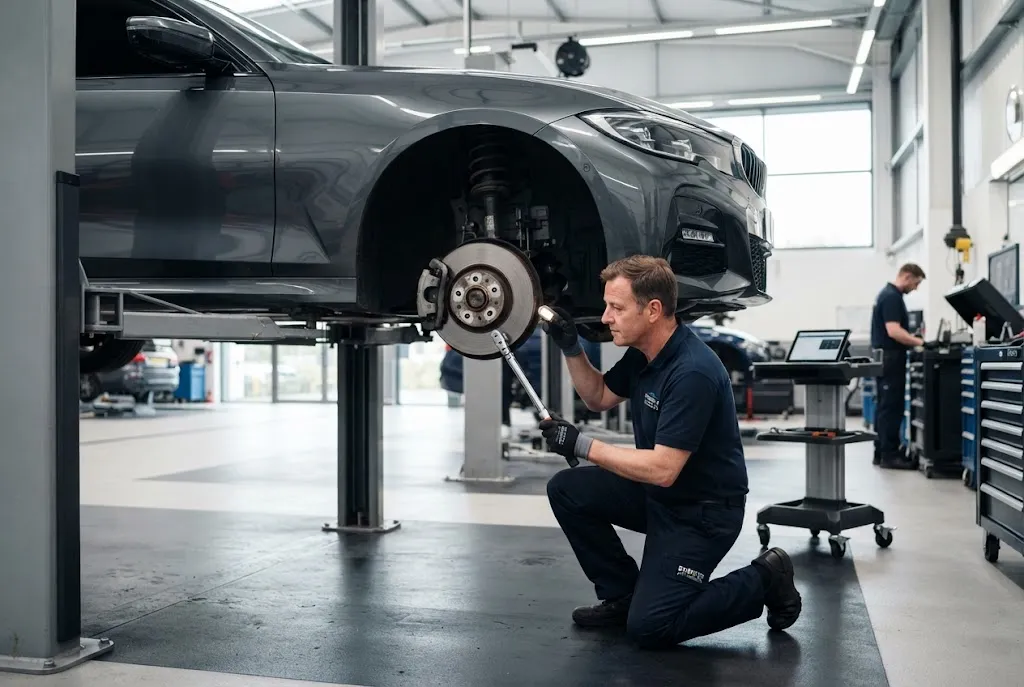
Regular vehicle safety checks are an important part of responsible driving in the UK. A car can have a current MOT certificate and still develop problems between tests, which is why drivers should pay attention to tyres, brakes, steering, suspension, lights, battery condition and other essential components throughout the year.
Some checks are simple enough to perform before setting off, while others require specialist equipment and professional inspection. GOV.UK states that drivers are responsible for making sure their vehicles remain safe to drive, even when they have a current MOT certificate. [GOV.UK vehicle safety guidance](https://www.gov.uk/check-vehicle-safe?utm_source=chatgpt.com)
Why Vehicle Safety Checks Matter
A vehicle’s condition can change considerably between servicing appointments. Tyres can lose pressure, brake components can wear, bulbs can fail and warning lights can appear without much notice. Regular checks provide an opportunity to identify these changes before they affect a journey.
The UK’s Highway Code advises drivers to take particular care that components including lights, brakes, steering, seat belts, demisters, wipers and washers are working correctly. It also recommends checking tyre pressures regularly and ensuring that fluid levels are maintained.
Safety checks should therefore complement normal servicing and the vehicle manufacturer’s maintenance schedule rather than replace either one.
Vehicle Safety Checks Before Every Journey
Not every inspection needs to take several minutes. Before driving, make a quick assessment of the areas that directly affect visibility, control and braking.
- Check that the windscreen, windows and mirrors provide clear visibility.
- Make sure the lights and indicators appear to be working.
- Check that the brakes feel normal and responsive.
- Look at the tyres for obvious damage or significant loss of pressure.
- Make sure warning lights are not indicating an unresolved fault.
- Check that luggage and other items are securely stored.
GOV.UK specifically recommends checking the windscreen, windows and mirrors, all lights and the brakes every time you drive.
Brake Services and Brake Inspection
Brakes are among the most important components to include in routine vehicle safety checks. A driver should be alert to changes in braking behaviour rather than waiting for a service appointment to investigate them.
Warning signs can include unusual noises, vibration, a brake pedal that feels unusually soft or changes in the vehicle’s behaviour when braking. GOV.UK notes that a car pulling to one side when braking can indicate a brake fault or incorrectly inflated tyres.
Professional brake services can examine components that are difficult to assess accurately at home. This may include the condition and operation of braking components, depending on the inspection being carried out.
If braking performance changes noticeably, arrange an appropriate inspection rather than continuing to drive normally and assuming the issue will disappear.
Tyre Inspection and Pressure Checks
Tyres should be a regular part of your vehicle safety routine. Check their pressure when they are cold and use the pressure recommended by the vehicle manufacturer. Also inspect the tread and sidewalls for cuts, bulges or other visible damage.
For cars, light vans and light trailers, the legal minimum tread depth is 1.6mm across the central three-quarters of the tyre and around its complete circumference.
However, legal tread depth is not the only consideration. Uneven wear can indicate problems involving braking, suspension or wheel alignment. The Highway Code specifically advises drivers to have such faults corrected as soon as possible.
If you regularly drive long distances, carry heavy loads or notice unusual tyre wear, professional inspection may provide more useful information than a visual check alone.
Suspension Checks and Vehicle Stability
The suspension system contributes to the way a vehicle handles bumps, corners and changes in road surface. Problems can sometimes become apparent through unusual noises, excessive bouncing, uneven tyre wear or changes in handling.
A basic walk-around can reveal obvious damage, but a proper suspension check generally requires a technician to inspect relevant components more closely.
Suspension problems can also overlap with tyre and alignment issues. For example, uneven tyre wear may have more than one possible cause. A garage can investigate the wider system rather than treating the tyre as an isolated problem.
Wheel Alignment and Tyre Balancing
Wheel alignment is worth considering when the vehicle pulls to one side, the steering wheel does not appear centred while driving straight or tyres develop unusual wear patterns. Alignment problems can affect tyre wear and the way the vehicle responds to steering inputs.
Tyre balancing addresses a different issue. Incorrect wheel balance can contribute to vibration, particularly at certain speeds. If you experience persistent steering-wheel or vehicle vibration, a professional assessment can determine whether balancing, alignment, tyre condition or another component is responsible.
These services are particularly relevant after certain suspension or steering repairs, after significant impacts with potholes or kerbs, or when abnormal tyre wear becomes apparent.
Steering Inspection
Steering should feel predictable and consistent. Changes such as excessive play, unusual noises, stiffness or unexpected movement deserve attention.
Power-assisted steering can also produce warning signs when there is an electrical, hydraulic or mechanical problem, depending on the vehicle’s system. GOV.UK driving-test guidance explains that unusually heavy steering can indicate a problem with power assistance.
Do not ignore a significant change in steering behaviour. A professional steering inspection can help determine whether the issue relates to the steering system, suspension, tyres, alignment or another component.
Lighting Checks for Visibility and Safety
Lights are essential for both seeing and being seen. Headlights, sidelights, indicators, brake lights, reversing lights, fog lights and number-plate lighting should be checked regularly.
The Highway Code requires drivers to ensure relevant lights and reflectors are clean and clear and that lights are properly adjusted so they do not dazzle other road users.
A simple walk around the vehicle can identify a failed bulb or visibly damaged lens. Some modern vehicles will also display a dashboard warning when an electrical or lighting fault is detected.
Keep lenses clean, particularly during wet or dirty conditions, because contamination can reduce the effectiveness of lighting.
Battery Testing and Electrical Checks
A weak battery can become particularly noticeable when the vehicle has difficulty starting or electrical systems behave unusually. Although battery problems are often associated with winter, battery condition matters throughout the year.
GOV.UK recommends checking the battery according to the vehicle manufacturer’s guidance.
A professional battery testing service can assess battery condition more accurately than simply observing whether the engine starts. If repeated starting difficulties occur, the charging system may also need investigation rather than automatically replacing the battery.
Warning Lights Should Never Be Ignored
Dashboard warning lights provide information about systems that may require attention. The meaning of each warning depends on the vehicle, so drivers should consult the owner’s handbook when an unfamiliar symbol appears.
Some warnings indicate conditions that require immediate attention, while others may indicate that an inspection or service is needed. A warning that disappears does not necessarily mean the underlying issue has been permanently resolved.
If several symptoms occur together, a diagnostic check can help identify electronic or mechanical faults that may not be obvious during a basic visual inspection.
Vehicle Safety Checks and the MOT
An MOT test and routine vehicle safety checks serve different purposes. An MOT assesses specific requirements at the time of the test, whereas regular checks help drivers identify problems throughout the year.
The official MOT inspection manual covers areas including brakes, steering, visibility, lamps, electrical equipment, tyres and suspension.
A current MOT certificate therefore should not be treated as proof that every component will remain in perfect condition until the next test. Regular maintenance remains the driver’s responsibility.
This distinction is particularly important when buying a used vehicle. Anyone considering a purchase can arrange an independent auto inspection service to obtain a more detailed assessment of the vehicle’s condition.
When to Arrange Professional Vehicle Safety Checks
A professional inspection can be useful when you notice a change that cannot be explained by a simple visual check. Examples include unusual braking behaviour, steering changes, persistent vibration, uneven tyre wear, warning lights or unexplained noises.
It can also make sense before a long journey, after a significant pothole or kerb impact, or when a vehicle has been unused for an extended period.
For wider seasonal preparation, combine professional checks with your seasonal vehicle maintenance. If you are preparing for a family trip or holiday, the inspection can also form part of your holiday vehicle checks.
Build Safety Checks Into Your Driving Routine
Effective vehicle safety checks do not need to be complicated. A short inspection before driving, regular tyre and fluid checks, attention to warning lights and timely professional inspections can help you stay aware of your vehicle’s condition.
The most important principle is to respond to changes rather than ignore them. Braking, steering, tyre condition, suspension, lighting and battery performance can all affect the reliability and safety of a vehicle.
By combining routine checks with manufacturer-recommended servicing and professional inspections where appropriate, UK drivers can take a more proactive approach to vehicle care. For official guidance, the GOV.UK vehicle safety information remains a useful reference for understanding your responsibilities as a driver. [Check your vehicle is safe to drive on GOV.UK](https://www.gov.uk/check-vehicle-safe?utm_source=chatgpt.com)
