

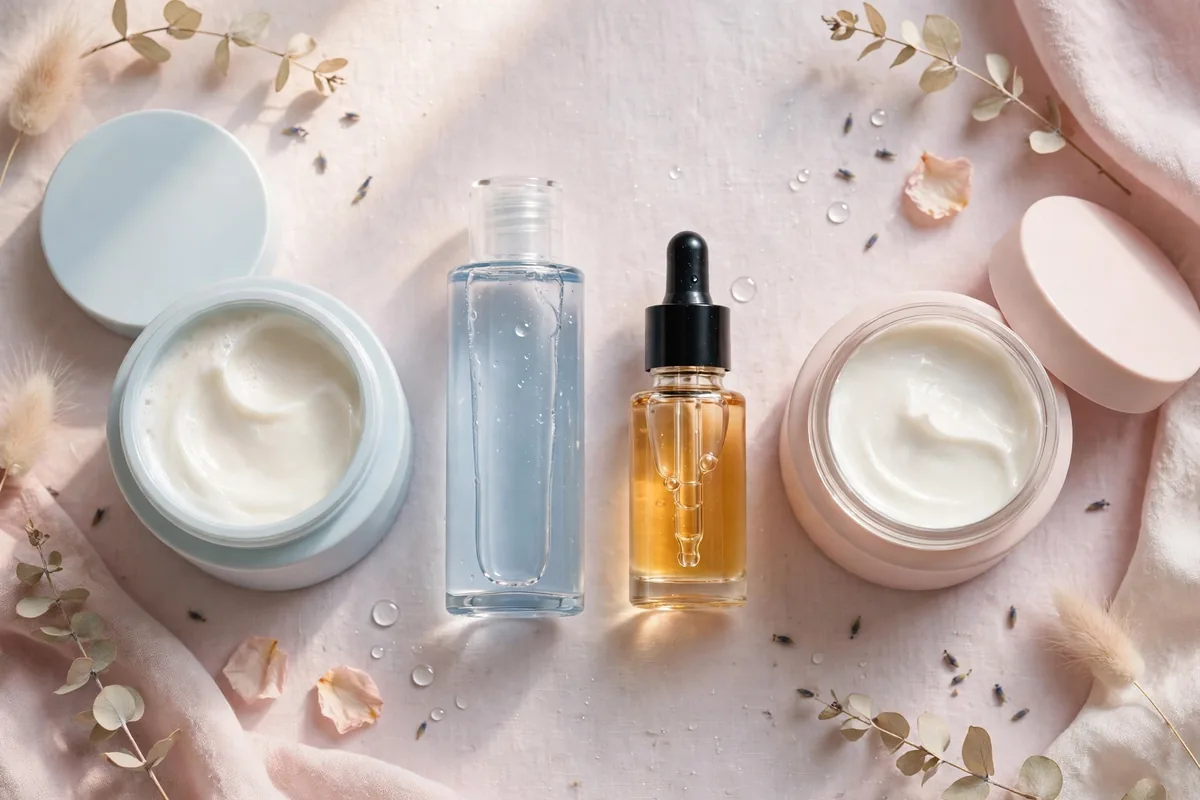
You can own excellent products and still get disappointing results if they go on in the wrong order. A rich cream applied before a watery serum can block it from reaching the skin; sunscreen layered underneath moisturiser cannot protect properly. Learning how to layer skincare products is less about buying more and more about sequence: get the order right and the routine you already own works harder. This guide walks through the correct order for morning and evening, the simple rule behind it, and the combinations worth keeping apart.
The One Rule Behind Skincare Layering
Almost every layering question is answered by a single principle: apply products from the thinnest consistency to the thickest. Water-based, fast-absorbing products go on first; heavier creams and oils come last, sealing everything underneath. Think of it as clothing — you would not put a coat on before a shirt and expect the shirt to do its job. Order also protects the one product whose position is non-negotiable: sunscreen must be the final step of a morning routine, sitting on top of everything else so it can form an even, protective film. If you are still deciding which products belong in your routine at all, start with our guide to face skincare products and what you really need before worrying about sequence.
The Morning Order, Step by Step
A well-layered morning routine looks like this. First, cleanse — a gentle wash, or simply water if your skin is dry in the morning. Second, apply any watery toner or essence while the skin is very slightly damp, which helps it spread and absorb. Third comes your treatment serum: a vitamin C serum is the classic morning choice, since antioxidants pair well with daytime protection. Fourth, eye cream, tapped gently around the orbital bone rather than rubbed. Fifth, moisturiser, matched to your skin type — lighter gels for oilier skin, richer creams for dry skin. Sixth and last, sunscreen, applied generously and given a few minutes to settle before makeup. Each layer only needs a brief pause — long enough for the surface to stop feeling wet, usually under a minute. Building this around your own skin matters more than copying someone else’s shelf, which is why our guide to skincare for different skin types is worth reading alongside this one.
The Evening Order and Where Actives Fit
Evenings follow the same thin-to-thick logic with one extra first step: remove the day properly. Makeup and sunscreen need a thorough cleanse, and many people use an oil or balm cleanser followed by a gentle water-based one. Then toner or essence if you use it, then your evening treatment. Retinol is the most common night-time active — it is traditionally used after cleansing, and beginners often apply it over a thin layer of moisturiser (a technique nicknamed buffering) to reduce irritation while skin adjusts. Exfoliating acids, where used, sit in the treatment slot too, but not on the same night as retinol for most people — alternating nights keeps skin calmer. Finish with moisturiser, and an oil or richer cream last if your skin is dry. Targeted routines follow the same framework: our guide to acne skincare and building a simple routine shows how treatments slot into this order without overloading breakout-prone skin.
Combinations to Handle With Care
Most products get along fine, but a few pairings deserve respect. Strong exfoliating acids and retinol on the same evening can leave skin stinging and flaky, so separate them. Vitamin C in the morning and retinol at night is a popular, sensible split that avoids the question entirely. Layering several new actives at once is the real trap: introduce one product at a time, a couple of weeks apart, so you can tell what is helping and what is irritating. If a product pills — rolling into little balls as you apply the next layer — you are probably using too much, or layering a water-based product over a silicone-heavy one; use less, and let each layer settle. To understand what the ingredients in each bottle actually do, our explainer on skincare ingredients and what they do is a useful reference when reading labels.
How Long to Wait Between Layers
One of the most common questions about layering is timing. The good news is that you do not need a stopwatch. For most water-based products — toners, essences and serums — waiting until the skin no longer feels wet, usually thirty to sixty seconds, is enough. Sunscreen deserves a little more respect: give it several minutes to form an even film before applying makeup, and be gentle when you do, since rubbing hard can disturb the layer you have just built. Moisturiser over a treatment serum can go on almost straight away. If you are short on time in the morning, it is better to use fewer products with brief pauses than many products with none, because piling wet layers on top of each other dilutes them and encourages pilling. The routine should fit your life: a calm four steps done properly will always outperform eight steps done in a rush.
Layering Makeup Over Skincare
Makeup sits at the very end of the morning sequence, after sunscreen has settled. The trickiest moment is foundation over sunscreen: apply it by pressing and stippling rather than dragging, and if the two persistently pill or slide, the textures may simply be incompatible — a different sunscreen finish often solves the problem. Powders, blushers and everything else follow as normal, since nothing in makeup needs to reach the skin itself. At the end of the day, remember that this stack — sunscreen, makeup and the day’s grime — is exactly why the evening cleanse needs to be thorough before your night layers go on. Treated in order, skincare and makeup stop competing and simply take their turns.
Keep It Simple Enough to Repeat
The best routine is the one you will actually do every day, so resist building a twelve-step ceremony. For most people, three to five products in the right order beat a crowded shelf used inconsistently. Learn how to layer skincare products once — cleanse, treat, moisturise, protect, thinnest to thickest — and you can slot any new product into its place without guesswork. In summer, lighter textures and reliable SPF matter most; our pick of summer beauty essentials shows how a warm-weather routine stays simple. Get the order right, give each product a few weeks to prove itself, and let consistency — not quantity — do the work.
