

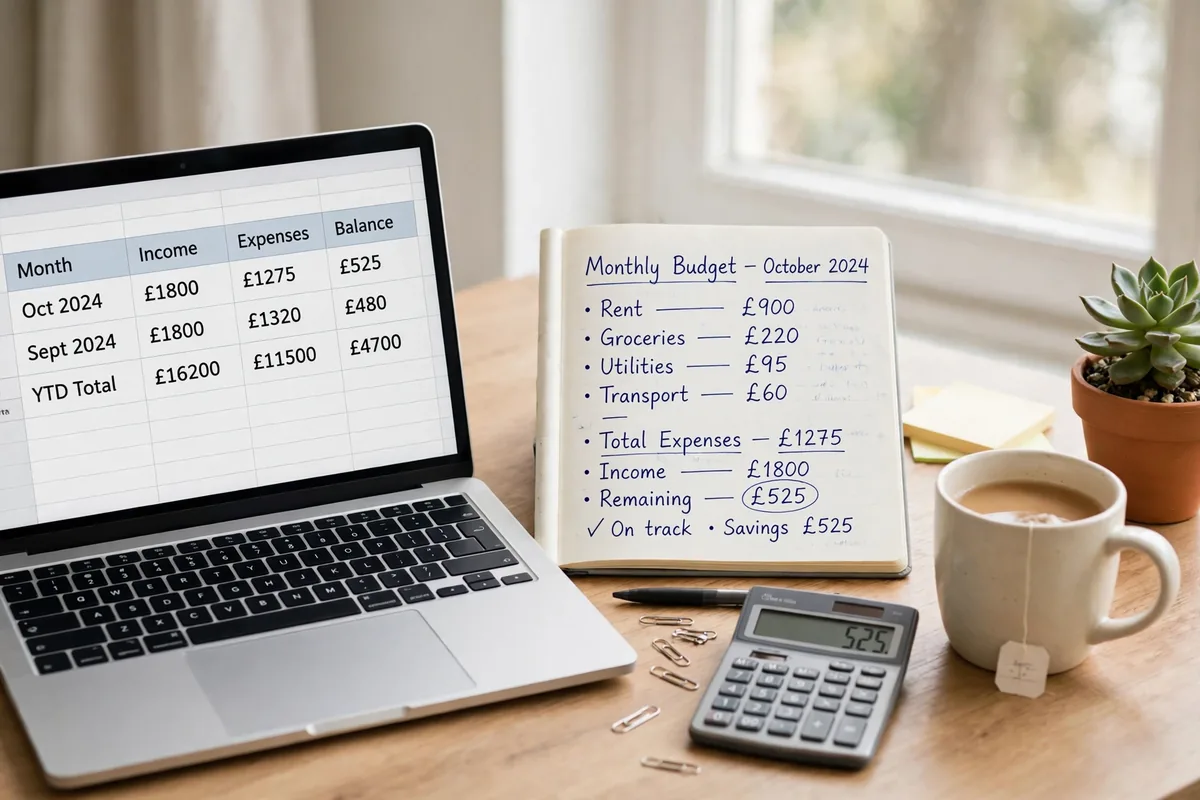
Running a small business without a budget is a bit like driving without a dashboard: you might be moving, but you have no idea how much fuel is left. Small business budgeting is simply the habit of deciding, in advance, what your money will do each month. It does not need specialist software or an accountancy degree. It needs honest numbers, a simple structure and a short monthly review. This guide walks through the process step by step, in plain English, so you can build a budget that survives contact with real life.
Why Small Business Budgeting Matters
Most small businesses do not fail because the idea is bad. They fail because cash runs out at the wrong moment: a quiet month lands at the same time as a tax bill, a supplier shortens its payment terms, or a piece of equipment gives up. A budget cannot stop those things happening, but it lets you see them coming. With a written plan you know which costs you can delay, which payments you must protect, and how many slow weeks you can absorb before you need to act. It also makes conversations with lenders, landlords and suppliers far easier, because you can show your numbers rather than guess at them.
A good budget is not a straitjacket. Think of it as a forecast you update as you learn. The first version will be rough; by the third or fourth monthly review it will be surprisingly accurate, and that accuracy is what turns budgeting from admin into a genuine business advantage.
Step 1: Work Out Your Real Income
Start with money in. List every income stream your business has: product sales, services, retainers, commissions and anything else. Then look at the last six to twelve months and write down what actually arrived in the bank, month by month, rather than what you invoiced. The gap between invoiced and received is where many budgets go wrong.
For your forecast, be deliberately cautious. Use your quieter months as the baseline and treat busy months as a bonus. If your income is seasonal, map the pattern across the year so you can see which months need support from the stronger ones. Anyone still at the planning stage can read about beauty careers and other popular UK business paths to sense-check the income their chosen trade typically produces.
Step 2: List Your Fixed and Variable Costs
Next, money out. Split it into two groups. Fixed costs are the ones that stay roughly the same each month: rent, insurance, software subscriptions, phone contracts, loan repayments and salaries. Variable costs rise and fall with activity: stock, materials, fuel, packaging, freelance help and marketing spend.
Vehicles are a classic variable-cost trap for small firms. If you run a car or van for work, the purchase or lease is only the start; servicing, tyres and repairs all land unevenly through the year. Our guide to car finance and managing vehicle costs explains the main ways to spread a purchase, and the companion piece on repair finance shows how to budget for maintenance instead of being ambushed by it. Whatever the cost category, the rule is the same: if it happens every year, it belongs in the budget every month, divided by twelve.
Step 3: Set Money Aside for Tax
Tax is the cost new business owners most often forget, because the bill arrives long after the money was earned. Protect yourself by moving a fixed percentage of every payment you receive into a separate savings account the day it lands. Many sole traders use somewhere between 20 and 30 per cent as a rough holding figure for income tax and National Insurance, then adjust once their accountant gives a personal estimate.
If you are VAT registered, treat the VAT portion of every invoice as money you are holding for HMRC, never as income. Keeping it in the same separate account makes the quarterly return a paperwork exercise instead of a financial emergency.
Step 4: Build a Cash Buffer
A buffer is what turns a bad month into an inconvenience. Aim first for one month of fixed costs in reserve, then build towards three. Add a small fixed line to the budget, even if it is modest at the start, and pay it like a bill. Buffers also open doors: once the business is stable, spare cash can be directed deliberately, for example into the kind of long-term property plays described in our guide to the best UK cities for buy-to-let investment, rather than leaking away on unplanned spending.
Step 5: Review Your Budget Every Month
A budget you never look at again is just a wish. Set a fixed half hour each month to compare what you planned with what actually happened. Where did you overspend? Where did income surprise you? Adjust next month’s figures rather than abandoning the plan. Watching wider conditions helps too: shifts described in our overview of UK property market trends affect rent, demand and customer spending in ways that ripple into almost every small business.
Common Budgeting Mistakes to Avoid
The same errors appear again and again. Being over-optimistic about income is the first. Forgetting annual costs such as insurance renewals and accountancy fees is the second. Mixing personal and business spending is the third, because it makes every other number unreliable. The fourth is budgeting once and never revisiting it. Avoid those four, and your small business budgeting will already be ahead of most.
Finally, keep the system simple enough that you will actually use it. A single spreadsheet with income, fixed costs, variable costs, tax savings and buffer contributions, reviewed monthly, beats a sophisticated tool you dread opening. Start this week, keep the numbers honest, and let the budget do its quiet work in the background while you get on with running the business.
A Simple Weekly Money Routine
Budgets survive on habits, not willpower. Once a week, spend ten minutes on three quick jobs: check the bank balance against what the budget expected, move any tax percentage from new income into the savings account, and glance at the week ahead for bills or quiet days. That tiny routine catches most problems while they are still small, and it means the monthly review holds no surprises. Pair it with the monthly review and your finances will feel calmer within a quarter.
