

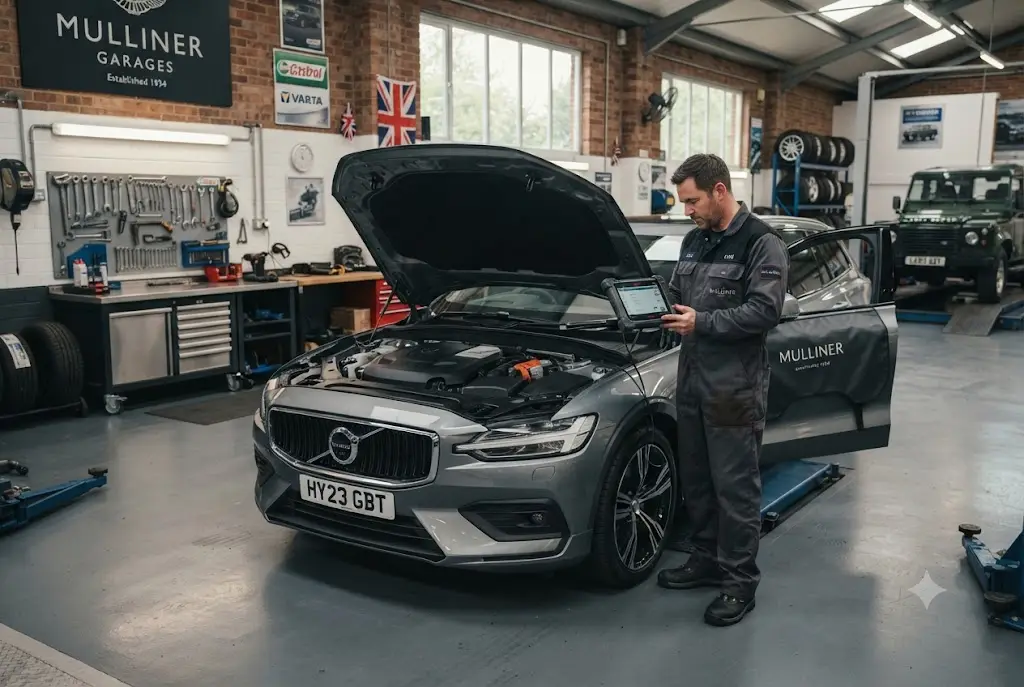
Hybrid servicing is an important part of keeping a hybrid car reliable, efficient and comfortable to drive. Although hybrids combine an internal combustion engine with electric technology, they still need regular maintenance. The exact requirements depend on the make, model, age and powertrain of the vehicle. Understanding what hybrid services involve can help owners choose the right garage, prepare for routine maintenance and avoid confusing hybrid ownership with conventional petrol or diesel car maintenance.
What Is Hybrid Servicing?
Hybrid servicing is the inspection and maintenance of a vehicle that uses both an internal combustion engine and an electric motor system. Depending on the design, a hybrid may use a high-voltage battery, regenerative braking and other components that differ from those found in a conventional petrol or diesel car.
Routine servicing still includes many familiar checks. Technicians may inspect fluids, filters, brakes, tyres, suspension, steering and other mechanical components. However, hybrid systems introduce additional areas that require suitable knowledge, diagnostic equipment and safety procedures.
That means choosing a garage based only on price may not be the best approach. A suitable technician should understand the particular hybrid system fitted to your vehicle and follow the manufacturer’s servicing requirements.
Why Hybrid Servicing Matters
Hybrid vehicles are designed to combine efficient engine operation with electric assistance. Keeping the vehicle properly maintained helps ensure that both sides of the powertrain can operate as intended.
Regular maintenance can also help identify developing problems before they become more disruptive. Tyre condition, brake performance, fluid levels, suspension components and cooling systems all remain important even when a car spends part of its journey running electrically.
Servicing is also useful for monitoring the condition of components that are specific to the hybrid system. The exact checks vary between vehicles, so owners should always refer to the manufacturer’s service schedule rather than assuming every hybrid requires the same procedure.
What Does a Hybrid Service Include?
There is no universal hybrid service package. Manufacturers specify different maintenance schedules, and the requirements can vary according to mileage, age and vehicle design.
A typical service may include checks such as:
- Engine oil and oil filter inspection or replacement where required
- Air and cabin filter checks
- Brake inspection
- Tyre condition and pressure checks
- Suspension and steering inspection
- Fluid level and condition checks
- Diagnostic checks
- Inspection of relevant hybrid-system components
- Checking warning lights and stored fault information
- General safety and condition checks
Some hybrid systems also have dedicated cooling arrangements for the battery or electrical components. These should be inspected and maintained according to the manufacturer’s recommendations.
The important point is that hybrid servicing is not simply a normal petrol-car service with an electric badge added. The technician needs to understand how the vehicle’s two power systems interact.
Toyota Hybrid Service: What Owners Should Know
Toyota is one of the most established manufacturers in the hybrid passenger-car market, so Toyota hybrid service is a common requirement for UK motorists.
Toyota’s hybrid range includes models using its Hybrid Synergy Drive system, with components such as an electric motor, hybrid battery and petrol engine working together. Toyota provides model-specific maintenance information and service programmes, so owners should check the requirements applicable to their particular vehicle.
For Toyota owners, it is particularly important to distinguish between general servicing and any manufacturer-specific hybrid checks or programmes. A Toyota dealer or appropriately equipped independent garage may be able to provide the required maintenance, but motorists should confirm that the chosen garage has the appropriate hybrid capability.
If you own a Toyota hybrid, keep records of previous servicing and repairs. This can help technicians understand the vehicle’s maintenance history and make future inspections more straightforward.
Do Hybrid Cars Need Oil Changes?
Yes, many hybrid cars still use an internal combustion engine, and that engine requires appropriate lubrication. The fact that a hybrid can drive electrically does not remove the need for engine maintenance.
The frequency of oil and filter changes depends on the vehicle and its manufacturer’s schedule. Some hybrid engines may operate differently from conventional engines because the petrol engine can stop and restart frequently during normal driving.
Owners should therefore follow the specific maintenance schedule supplied for their vehicle rather than applying a generic oil-change interval.
Hybrid Brakes Can Work Differently
One interesting aspect of hybrid maintenance is braking. Many hybrids use regenerative braking, which allows the electric motor to help slow the vehicle while recovering some energy for the battery.
This can reduce reliance on the conventional friction brakes during certain driving conditions. However, brake pads, discs and related components still require inspection.
Brake components can also experience different usage patterns depending on how the vehicle is driven. A technician should therefore assess their actual condition rather than assuming that reduced friction-brake use means maintenance is unnecessary.
Hybrid Battery Maintenance
The high-voltage battery is one of the most important components in a hybrid vehicle. It stores electrical energy and works with the vehicle’s control systems and electric motor.
Battery design and maintenance requirements vary considerably between manufacturers and models. Some systems use air cooling, while others use different thermal-management arrangements. Owners should follow the manufacturer’s recommendations and avoid attempting to service high-voltage components themselves.
Warning messages, unusual changes in hybrid-system behaviour or significant changes in vehicle performance should be investigated by a suitably qualified technician.
Battery condition is also an important consideration when buying an older hybrid. A used hybrid should be assessed as a complete vehicle rather than judged solely by its fuel economy or purchase price.
Can Any Garage Service a Hybrid?
Not necessarily. Some routine work is similar to conventional vehicle maintenance, but hybrid systems introduce additional technical and safety considerations.
A garage working on high-voltage components needs appropriate training, equipment and procedures. Before booking, ask whether the garage regularly services hybrids and whether its technicians are trained to work on high-voltage systems.
You should also check whether the garage can access the diagnostic equipment needed for your particular vehicle. This can be especially important when dealing with hybrid-system warning lights or faults.
If you are comparing garages, our garage reviews guide provides a useful framework for assessing customer feedback, service quality and the differences between local, independent and national garages.
Hybrid Servicing at Independent Garages
Independent garages can be a practical option for hybrid owners, particularly when they have technicians with appropriate hybrid training and experience.
An independent workshop may offer a more personalised service and could have strong knowledge of particular makes or models. However, the key consideration should always be technical capability rather than whether the garage is independent or part of a national chain.
Ask specifically about hybrid experience before booking. If the vehicle needs work involving the high-voltage system, make sure the garage can safely perform that work.
For more general maintenance, a reputable independent garage may be perfectly suitable when it follows the vehicle manufacturer’s requirements and has the right diagnostic equipment.
Hybrid Maintenance and Tyres
Tyres remain an important part of hybrid maintenance. The vehicle’s weight, power delivery and regenerative braking characteristics can affect how it feels on the road, while correct tyre pressure supports handling and efficiency.
Check tyre pressures regularly according to the manufacturer’s recommendations. Inspect tread depth and look for uneven wear, cuts or other visible damage.
Uneven tyre wear can sometimes indicate issues with steering or suspension geometry. If you notice the car pulling to one side or the steering wheel does not sit correctly while travelling straight, consider having the vehicle inspected. Our wheel alignment guide covers the causes and warning signs in greater detail.
Hybrid Ownership and Everyday Driving
Hybrid ownership can offer a different driving experience from a conventional petrol or diesel vehicle. Depending on the model and driving conditions, the car may operate using the petrol engine, electric motor or a combination of both.
Drivers can often make the most of a hybrid by adopting smooth driving habits. Gentle acceleration, anticipating traffic and avoiding unnecessary hard braking can support efficient driving.
However, owners should not become overly focused on achieving the lowest possible fuel consumption. Safe and predictable driving should remain the priority.
Hybrid Cars and Eco-Friendly Driving
Hybrid vehicles are often chosen by motorists interested in eco-friendly driving because they can reduce fuel use in suitable conditions. Their ability to recover energy through regenerative braking and use electric assistance can be particularly useful in urban traffic.
However, environmental impact involves more than fuel consumption during individual journeys. Manufacturing, vehicle size, driving habits, mileage and the source of electricity used in plug-in hybrid charging all influence the broader picture.
For drivers considering a hybrid as part of a more sustainable travel approach, it makes sense to look at how the vehicle fits into their overall lifestyle rather than focusing on one efficiency figure.
Hybrid Servicing Costs
The cost of hybrid servicing varies according to the manufacturer, vehicle age, service level, mileage and garage. A routine service does not automatically cost more simply because a vehicle is a hybrid, but specialist diagnostics or work involving hybrid-specific components may increase the price.
Older vehicles can also require additional maintenance as components wear with age and mileage. Battery-related repairs, in particular, should be treated as a separate consideration from routine servicing.
When comparing quotes, check what is included. Two garages may advertise different prices while offering different service levels, parts or inspection schedules.
How Often Should a Hybrid Be Serviced?
The correct servicing interval depends on the vehicle. Manufacturers may specify intervals based on time, mileage or a combination of both.
Do not assume that a hybrid can go longer between services simply because the engine sometimes switches off. The vehicle still has mechanical, electrical and safety systems that require regular inspection.
The owner’s handbook or manufacturer’s service information should be the starting point for determining when the next service is due.
Hybrid Servicing Before a Long Journey
If you are planning a long road trip, checking the vehicle beforehand can reduce the chance of avoidable problems.
Check tyre pressures, tread condition, fluid levels, lights, wipers and warning messages. If the next scheduled service is approaching, arranging maintenance before the trip may be sensible.
Hybrid owners should also make sure they understand the vehicle’s driving modes and charging arrangements where applicable. Plug-in hybrids require additional planning because charging access can influence how efficiently the vehicle is used during longer journeys.
Hybrid Servicing vs EV Servicing
Hybrid and fully electric vehicles share some technology, but their servicing requirements are not identical. A hybrid still has an internal combustion engine, while a battery-electric vehicle does not require engine oil or conventional engine servicing.
If you are considering moving from a hybrid to a fully electric car, our EV servicing guide explains the maintenance considerations associated with electric vehicle ownership.
Understanding this distinction can also help drivers choose the right garage. A workshop that understands hybrid systems may not automatically specialise in every type of electric vehicle, so always check its current capabilities.
How to Choose the Right Hybrid Garage
Before booking hybrid servicing, consider these questions:
- Does the garage regularly service hybrid vehicles?
- Are technicians trained to work safely with high-voltage systems?
- Does the garage have suitable diagnostic equipment?
- Can it follow the manufacturer’s servicing schedule?
- Will it explain additional repairs before carrying them out?
- Does it provide a clear invoice and service record?
- Does it have positive recent customer feedback?
A garage that can answer these questions clearly is easier to assess than one that simply advertises itself as a hybrid specialist.
Final Thoughts
Hybrid servicing is an essential part of responsible hybrid ownership. Although hybrid cars can reduce fuel use and offer efficient urban driving, they still need regular mechanical maintenance as well as appropriate attention to their electrical systems.
The best approach is to follow the manufacturer’s service schedule and choose a garage with suitable hybrid training, equipment and experience. Whether you use a dealer, national chain or independent workshop, compare the actual services offered rather than relying on the business name alone.
With the right maintenance routine, hybrid drivers can enjoy the benefits of efficient driving while keeping their vehicles safe, dependable and ready for everyday journeys.
