

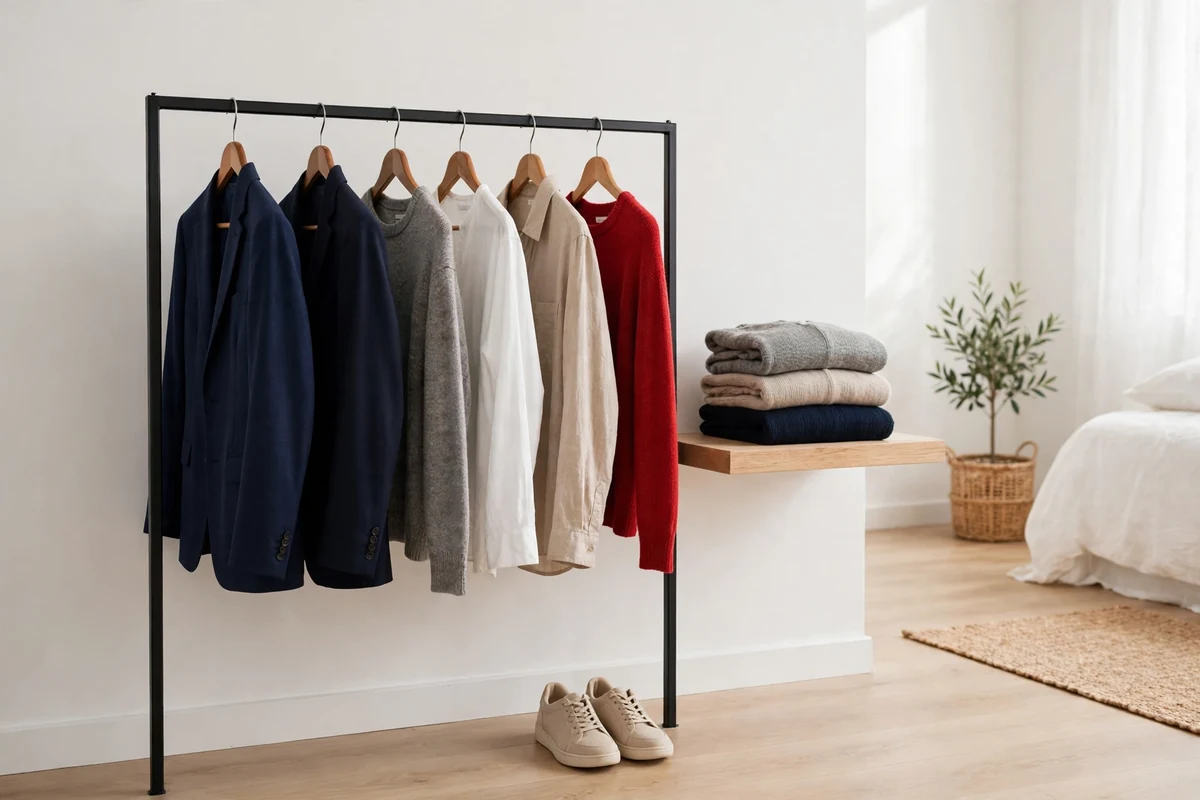
A capsule wardrobe is a small, carefully chosen collection of clothes that all work together — typically 25 to 40 pieces that you can mix and match into weeks of outfits. The idea is simple: fewer clothes, chosen well, so getting dressed takes minutes and everything you own actually gets worn. If your wardrobe is full but you still feel you have nothing to wear, a capsule wardrobe is the fix. Here is how to build one that suits your life, your style and your budget.
Start with an honest audit
Before buying anything, empty your wardrobe and go through every item. Sort everything into four piles: loves it and wears it, fits but never reaches for it, doesn’t fit or is damaged, and seasonal storage. Be honest — the jeans you are keeping for “one day” and the top that only works with shoes you don’t own are clutter, not options. Try on anything you are unsure about. What remains in the first pile tells you your real style: the colours you actually wear, the fits you feel good in, and the gaps you genuinely have. Most people discover they already own the core of a capsule wardrobe; it is just buried.
Count what is left. If your “love and wear” pile has around 30 versatile pieces, you are closer than you think. Note the colours that dominate — a capsule works when most pieces share a palette, so three or four core colours plus one or two accents is a good framework.
Choose your palette and your pieces
Pick base colours that suit you and go with everything: black, navy, grey, white and beige are the usual foundations. Add one or two accent colours you love for tops, knitwear and accessories. Every new piece you consider must work with at least three things you already own — that single rule is the heart of the capsule wardrobe method, and it stops impulse buys that only match one outfit.
A classic starter capsule for the UK climate looks something like this: two pairs of well-fitting trousers or jeans, a skirt or tailored shorts for warmer months, five to seven tops that layer, two knitwear pieces, a dress or jumpsuit that dresses up or down, a smart blazer, a waterproof coat and a warm winter coat, plus two or three pairs of shoes that cover smart, casual and wet weather. Adjust the balance to your life — if you work in an office five days a week, weight it formal; if you work from home, weight it comfortable but presentable.
Buy quality where it shows
A capsule wardrobe asks more of each garment, because everything gets worn weekly. That makes fabric and construction matter more than logos. Spend the most on the pieces you wear hardest and that carry an outfit: coats, shoes, knitwear and good denim. Natural fibres — wool, cotton, linen — generally last longer and look better after repeated washing than cheap synthetics. Check seams, linings and buttons before you buy, and learn the simple repairs (sewing a button, fixing a hem) that keep favourites alive for years.
You don’t need to replace everything at once. Most people build a capsule wardrobe gradually: audit first, live with the reduced wardrobe for a season, then replace worn-out pieces one at a time with better versions. This also spreads the cost. When you do shop, knowing your palette and your rules makes it quick — and it pairs well with the considered approach in our guide to British beauty brands, where the same “fewer, better” thinking applies to your makeup bag.
Make outfits, not just piles of clothes
Once your pieces are chosen, spend twenty minutes building outfits deliberately. Lay out combinations, try them on, and photograph the ones that work — a phone album of ten proven outfits ends morning indecision permanently. Think in formulas: bottom + top + layer + shoes. A capsule of 30 pieces that all combine gives you more real outfits than a bursting wardrobe of clashing one-offs. Accessories do the heavy lifting for variety — scarves, belts, jewellery and a change of shoes turn the same base outfit from weekday to evening. Our guide to building the perfect makeup kit takes the same minimal, everything-earns-its-place approach, and the two work beautifully together.
Seasonal rotation keeps the capsule manageable in a British climate. Store heavy knitwear away in late spring and bring it back in autumn, swapping in lighter pieces. Our guide to summer beauty essentials covers the seasonal switch for your routine; do the same review for your wardrobe twice a year, and donate or sell anything that survived a full season unworn.
Common mistakes to avoid
Three mistakes undo most first attempts. The first is copying someone else’s capsule list exactly — a minimalist influencer’s 25 pieces reflect her climate, job and taste, not yours, so use published lists for structure only and fill them from your own audit. The second is going too small too fast: cutting to 20 pieces in a weekend leaves you stranded when half are in the wash, so reduce in stages and live with each stage for a few weeks. The third is ignoring your real life — a capsule of dry-clean-only silk is a poor match for someone cycling to work with a toddler. Your wardrobe has to serve the days you actually have. If a piece is beautiful but you have reached past it for a month, it belongs in someone else’s capsule, not yours.
What a capsule wardrobe is not
A capsule wardrobe is not a uniform, and it is not about depriving yourself. You keep the pieces you genuinely love — including the statement coat or the bright dress that breaks your own palette rules — as long as they earn their place by being worn. Nor is it a one-time project: bodies change, jobs change and tastes change, and the capsule should change with them at the twice-yearly review. Think of it as a system for paying attention to your clothes, rather than a strict count you must never exceed.
Keep it working
The rule that maintains a capsule wardrobe is one in, one out. When something new earns a place, something else leaves — sold, donated or recycled. Before any purchase, ask three questions: does it fit my palette, does it match at least three things I own, and would I wear it this week? If any answer is no, leave it. Many capsule fans also keep a short “holding box”: new pieces live there for a fortnight, and if they haven’t been worn by then, they go back.
Give the system a full season before judging it. The first fortnight can feel restrictive; by week six, most people report the opposite — less stress, a tidier bedroom, money saved, and a clearer sense of their own style. A capsule wardrobe is not about owning little for its own sake. It is about owning exactly what serves you — and nothing that doesn’t.
