

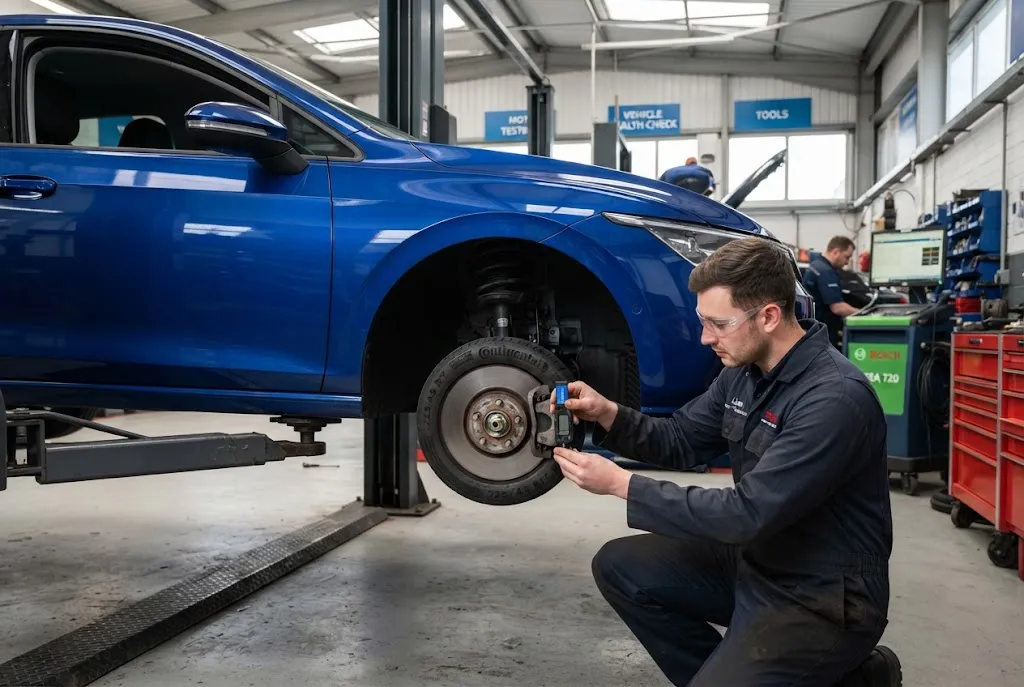
Regular vehicle safety checks can help UK drivers identify problems before they affect everyday journeys. Brakes, tyres, steering, suspension, lights and the battery all play important roles in keeping a vehicle safe and reliable. Some checks can be completed visually by the driver, while others require professional inspection and specialist equipment.
Why Vehicle Safety Checks Matter
Every journey depends on several vehicle systems working correctly at the same time. Effective brakes help the driver slow and stop, tyres provide road contact, steering allows directional control, and lights help the driver see and be seen.
Regular checks can help identify visible damage, unusual wear or changes in vehicle behaviour. They do not guarantee that every fault will be detected, but they provide an important layer of routine care between professional servicing and inspections.
For a broader maintenance routine, drivers can also review our guide to car maintenance, which covers servicing, batteries, tyres and other everyday vehicle care considerations.
Tyre Condition and Pressure
Tyres are one of the first areas drivers should consider when carrying out basic vehicle safety checks. They provide the only direct contact between the vehicle and the road, so their condition can affect handling, braking and overall road performance.
Inspect the tyres for obvious cuts, bulges, cracks or other damage. Look for unusual or uneven tread wear, which may indicate a problem that needs further investigation. Tyre pressures should also be checked against the figures recommended by the vehicle manufacturer.
A tyre pressure warning light should not be ignored. If a tyre repeatedly loses pressure, there may be a puncture, valve problem or another issue that requires professional attention.
Brake Services and Warning Signs
Reliable brakes are fundamental to safe driving. Professional brake services can assess components for wear and identify issues that may not be visible during a simple visual inspection.
Drivers should pay attention to changes in braking behaviour. Squealing, grinding, vibration, pulling to one side or an unusual brake-pedal feel can indicate that the braking system needs inspection.
These symptoms can have different causes, so avoid assuming that a particular noise automatically means one specific component has failed. A qualified technician can diagnose the problem and explain the recommended repair.
Checking Suspension and Ride Quality
The suspension system affects how the vehicle responds to bumps, uneven surfaces and changes in road conditions. Suspension repair may be necessary when components become worn or damaged.
Changes in ride quality can provide useful warning signs. Excessive bouncing, unusual noises over bumps, uneven tyre wear or a vehicle that appears to sit differently on one side may justify a professional inspection.
Do not rely only on how comfortable the vehicle feels. Suspension components can affect handling and tyre wear, making their condition relevant to both vehicle performance and safety.
Wheel Alignment and Steering Alignment
Correct wheel alignment helps the vehicle track properly on the road. Wheel alignment problems can sometimes develop after hitting potholes, kerbs or other road hazards.
Signs may include uneven tyre wear, a steering wheel that does not sit straight when travelling on a suitable level road, or the vehicle pulling consistently to one side.
Steering alignment and related steering issues should be assessed by a professional because similar symptoms can have different causes. Continuing to drive without investigating a significant handling change may allow an underlying problem to worsen.
Battery Inspection
A reliable battery is important for starting the vehicle and powering its electrical systems. A battery inspection can help determine whether a battery or charging system is showing signs of weakness.
Slow engine cranking, repeated starting difficulties, dimming electrical systems or unexplained electrical problems can warrant professional attention. However, these symptoms do not necessarily mean the battery itself is the cause.
A technician can test the relevant components and determine whether the battery, alternator or another part of the electrical system requires attention.
Lighting Inspection
Lights are essential for visibility and communication with other road users. A regular lighting inspection should include headlights, brake lights, indicators, rear lights and other relevant exterior lighting.
Drivers can check lights visually with the vehicle safely parked. Ask another person to operate the controls if necessary, particularly when checking brake lights or reversing lights.
Replace faulty bulbs or address electrical problems promptly. Keeping light lenses clean can also help maintain visibility, particularly during wet or dirty road conditions.
Vehicle Health Checks
Professional vehicle health checks can provide a broader assessment of the car’s current condition. Depending on the garage and vehicle, an inspection may cover tyres, brakes, suspension, steering, fluids, lights and other important systems.
Health checks can be particularly useful before a long journey or when purchasing a used vehicle. They can also help drivers understand which maintenance items may require attention in the near future.
Ask the garage to separate urgent safety-related issues from routine recommendations. This makes it easier to understand what needs immediate attention and what can potentially be planned into future maintenance.
Dashboard Warnings Should Not Be Ignored
Modern vehicles use warning lights and messages to alert drivers to potential problems. Some warnings are relatively minor, while others can indicate a fault that requires immediate attention.
If a warning appears, check the vehicle handbook for the manufacturer’s explanation. If the warning is accompanied by unusual noises, loss of performance, smoke, overheating or a significant change in handling, stop in a safe location and seek appropriate assistance.
Do not assume that switching the engine off and restarting the vehicle has permanently resolved a warning. If the warning returns, professional diagnosis may be necessary.
Vehicle Safety Checks Before a Long Journey
Long journeys are a useful reminder to carry out basic checks. Before setting off, inspect the tyres, lights and general exterior condition. Check that the windscreen is clean and that you have adequate visibility.
It is also sensible to make sure essential fluids are at appropriate levels according to the vehicle manufacturer’s guidance. If your car has recently displayed a warning light or developed an unusual noise, consider having it inspected before travelling a long distance.
Comfort-related systems can also matter during longer journeys. Our guide to car comfort covers air conditioning, climate control and other factors that can make everyday driving more pleasant.
Vehicle Safety Checks and MOTs
Routine safety checks and servicing should not be confused with an MOT. An MOT is a legal test that assesses specific requirements at the time of testing. Routine maintenance is broader and is intended to keep the vehicle in suitable condition throughout the year.
A vehicle passing an MOT does not mean that every maintenance issue has been eliminated. Likewise, regular maintenance does not remove the need for an MOT where one is legally required.
Drivers can use the official GOV.UK MOT guidance to check current information about MOT requirements in Great Britain.
What to Do When a Safety Problem Appears
If a vehicle develops a significant safety issue, avoid continuing to drive simply because the destination is close. Problems involving brakes, steering, tyres or serious mechanical faults may require immediate attention.
For minor maintenance issues, arranging a garage appointment may be appropriate. For a breakdown or vehicle that cannot safely continue, emergency car help may be more suitable.
If you are unsure whether a vehicle is safe to drive, explain the symptoms to a qualified professional and follow their advice. It is better to investigate a serious change in vehicle behaviour than to assume it will disappear on its own.
Creating a Simple Safety Check Routine
You do not need to spend hours inspecting your vehicle every day. A practical routine can include quick visual checks combined with scheduled professional maintenance.
- Check tyre condition and pressure regularly.
- Look for damaged or faulty exterior lights.
- Pay attention to changes in braking performance.
- Notice unusual steering or suspension behaviour.
- Respond appropriately to dashboard warning lights.
- Keep windscreen glass, mirrors and lights clean.
- Arrange professional inspections when problems appear.
- Keep servicing and maintenance records up to date.
These simple habits can help drivers notice changes sooner and communicate useful information to a garage when professional diagnosis is required.
Final Thoughts on Vehicle Safety Checks
Vehicle safety checks are an important part of responsible car ownership. Tyres, brakes, suspension, steering, batteries and lights all deserve regular attention, while unusual noises, warning lights and changes in handling should be investigated rather than ignored.
Drivers do not need specialist mechanical knowledge to build a sensible safety routine. Basic visual checks, awareness of warning signs and regular professional maintenance can work together to keep a vehicle in suitable condition.
The most important principle is to treat safety-related changes seriously. When a vehicle no longer behaves as expected, seek appropriate professional advice before continuing to drive.
